Are you planning to buy or build a beautiful, modern home in Portugal? The Portuguese government has released in May 2026 a massive new housing law (Decree-Law 97/2026) that changes everything.
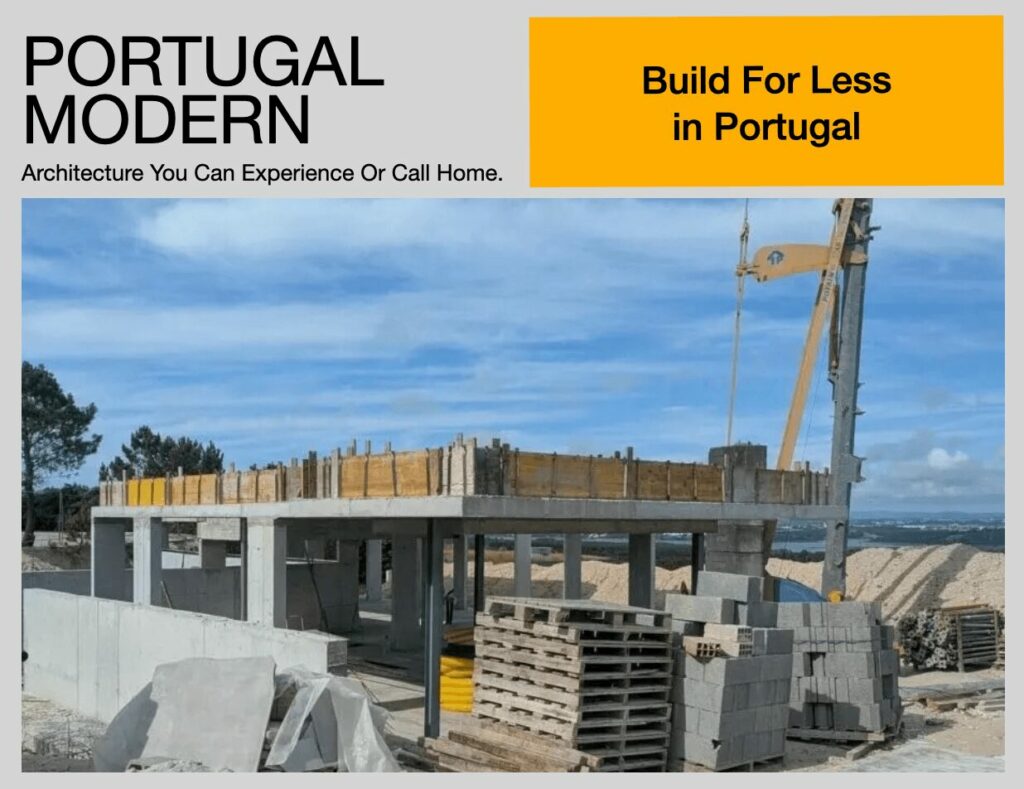
This new package brings huge tax cuts for building houses, but it also includes strict rules about where you pay your taxes. Whether you are a local Portuguese citizen or an expat moving from abroad, timing your move is now the most important step.
Here is how the new rules work, and why this is a historic opportunity for modern architecture hotspots like Bom Sucesso.
The Golden Rule: Your Tax Residency Comes First
If you are an international buyer, the very first thing you need to understand is Portugal’s new rule on Tax Residency.
- The Non-Resident Penalty: If you buy a residential property in Portugal as a non-resident (for example, as a holiday home while living abroad), you must now pay a flat 7.5% IMT (Property Transfer Tax). This is much higher than what residents pay which is a progressive tax model .
- The 2-Year Window for Expats: There is a great exception. If you buy a home and become an official Portuguese tax resident within 2 years, you can apply to get a refund for that extra tax you paid.
- The 6-Month Move-In Rule: If you want to use the brand-new construction tax cuts (explained below) to build a modern home, you must officially move into the house as your main, permanent home within 6 months of finishing it, and live there for at least 12 months. If you do not, you will face a heavy 10% tax penalty.
The takeaway? To get the biggest savings, you should plan to make Portugal your permanent, official home.
The Big Win: Construction Tax Drops from 23% to 6%
For years, the biggest complaint when building a modern home in Portugal was the high Value Added Tax (VAT) on construction services. Builders had to pay a massive 23% tax on labor and building works.
Under the 2026 law, that tax drops all the way down to 6% for building or renovating a home!
To get this cheap 6% rate, your project must meet these conditions:
- The house must be your main, permanent residence.
- The total value of the property (Land + Construction) cannot be more than €660,982.
If you are a private individual building your own home, you pay the bills and then apply for a partial tax refund to get the difference back. This can save you tens of thousands of euros on a modern build!
You want to Rent out?
The 6% rate applies also if you build a house to rent out to others at a “moderate rent” capped at €2,300 per month.
A Real Example: How Big Can Your House Be?
Let’s look at example to see how this €660,982 limit works in practice if you want to build a high-quality modern villa:
- The Plot Cost: Imagine you buy a beautiful plot of land for €130,000 at Bom Sucesso.
- The Remaining Budget: To stay under the government’s tax-cut limit, you have €530,982 left to spend on the actual construction works (€660,982 minus €130,000).
- The Size of the House: If we estimate a premium building cost of €2,000 per square meter (sqm) (including the low 6% VAT, architect fees, and licenses), you can build a house that is 265.5 square meters big!
What does a 265.5 sqm house look like? It is a very spacious 3-bedroom or 4-bedroom luxury home. This size easily allows for a large open-plan living room and kitchen, multiple en-suite bathrooms, a garage, and the signature large glass walls and outdoor terraces that define modern architecture.
What This Means for Bom Sucesso’s 130 Golden Opportunities
If you love contemporary architecture, you are likely familiar with Bom Sucesso Resort near the Óbidos lagoon. It is famous as a permanent showcase of modern living, designed by a collection of global architecture masters.
The new 2026 tax updates are expected to completely transform the resort because of one incredible fact: Bom Sucesso still has around 130 empty building plots available.
All of these remaining plots come with a designed by Portuguese modern Architects, some of them by legendary Pritzker Prize-winners:
- Álvaro Siza Vieira (The master of Portuguese modernism)
- Eduardo Souto de Moura (Famous for his beautiful, minimalist stone and concrete designs)
- David Chipperfield (The iconic British architect known for elegant simplicity)
Before this year, building one of these unique, high-end architectural masterpieces meant paying a painful 23% tax on top of your construction costs. Today, thanks to the drop to 6%, these 130 empty plots have suddenly become the better investment opportunity for modern design lovers in Portugal.
Summary Checklist for Buyers
- Check the Combined Price: Ensure your plot price plus construction costs stay under the €660,982 limit to unlock the 6% tax rate.
- Plan Your Move: If you are an expat, change your official tax residency to Portugal within 2 years of buying to avoid the non-resident property tax penalty.
- Move In Quickly: Register your new modern villa as your permanent home within 6 months of completion.
Disclaimer: Tax laws can be complicated and depend heavily on your personal situation. Always speak to a registered Portuguese lawyer or accountant before signing any contracts or changing your tax status.
If you are an owner at Bom Sucesso, you already know the feeling. It seems like the Administration operates as kings in their own castle, dictating exactly what we can and cannot do with our private gardens, houses, and commercial spaces. And it is even more frustrating to see how they simply pass the crown among themselves from one corporate manager to the next.
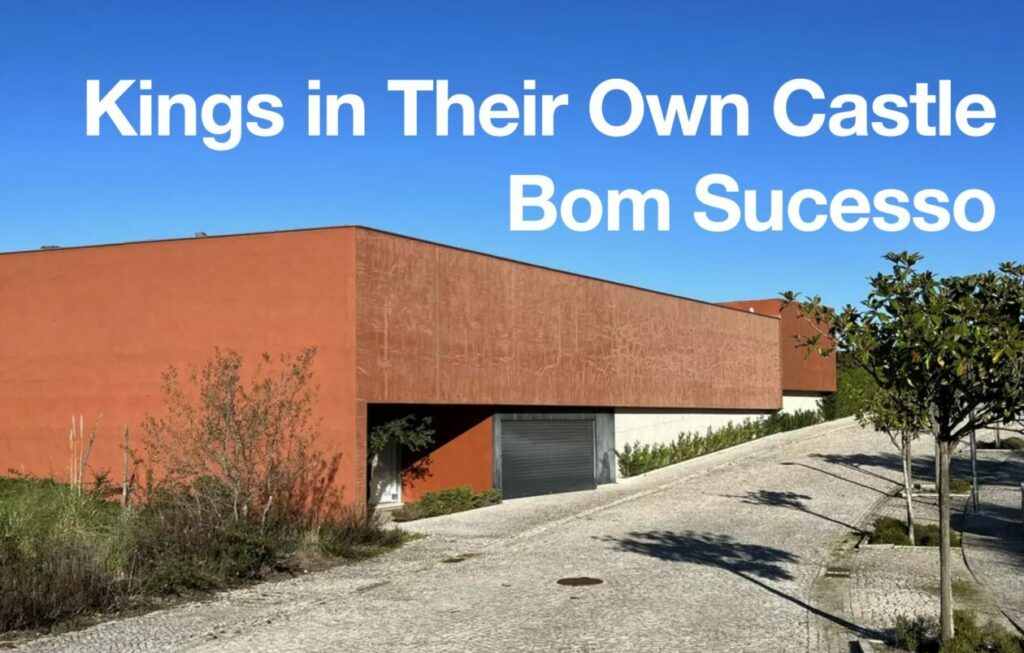
A Kingdom Built From the Beginning
To understand how we got here, we have to look at the foundational rules. If you look at the original Resort rulebook from 2007, it explicitly dictates that the corporate “tourist operator” serves as the permanent administrator “without a time limit.”
This means the private owners have never had a democratic say or a ballot box to elect who manages the resort. Because the rules legally lock in the corporate entity rather than a specific person, the operator is free to appoint or swap out whoever they want to represent them. They never need to hold an election to ask for our permission when leadership changes. They simply pass the crown among themselves behind closed doors—as we saw recently when management suddenly shifted from Pedro Portugal to Roberto Solis, Eduardo Montenegro and Sergio, and notify the owners after the fact. The faces change, but the castle’s throne was designed from day one to remain permanently out of our reach.
The rules that were strict from the beginning
Many owners assume that the resort’s incredibly strict aesthetic and behavioral rules were made more strict recently. But if you look at the original documents, those rules were also written into the Administration Regulations from the very beginning. Since the original 2007 rulebooks, we were strictly forbidden from altering the exterior color of our houses or changing the garden layout without prior written permission. The rules banned installing anything with exterior visibility, including outdoor furniture, awnings, or clothes racks.
2015: When the Condominium Claimed the Crown
What actually changed in 2014 and 2015 wasn’t the text of these behavioral rules; it was the Administration’s power to ruthlessly enforce them. Here is the story of how the Administration bypassed our private justice system, rigged the legal playing field, and created the unbalanced reality we live with today.
Originally, the resort’s rules required that any dispute, including the collection of condominium debts or punishing rule-breakers, had to be submitted to a private Arbitration Tribunal (a private court where people or companies solve disputes without going to a normal government court) in Porto. While the original rules already gave the Administration the unchecked power to act as the “police” (allowing them to confiscate items or destroy garden alterations without prior notice), the Administration realized the Arbitration requirement completely paralyzed their ability to quickly collect money. They were looking for a way to bypass the expensive Arbitration Tribunal so they could use cheap public courts to act as the “judge” for collecting debts.
The Loophole: Erasing the 75% Supermajority
Fundamentally changing the BSR rulebook to strip away owner protections was designed to be nearly impossible. The founding 2007 rulebooks explicitly stated that altering the regulations required a massive supermajority of 75% (three-quarters) of the total value of the resort.
The Administration knew they could never convince 75% of the private owners to voluntarily surrender their rights. So, they used a brilliantly ruthless legal loophole:
1. The 1-Hour Delay Loophole
Under the regulations, if a General Assembly doesn’t have enough attendance to open, it is delayed for one hour. When it restarts, the massive 75% attendance requirement legally vanishes, and they only need 25% of the resort to hold the meeting. By intentionally using this loophole in 2015, the meeting was officially delayed to 10:30 AM due to a “lack of quorum”. When it restarted, the total attendance in the room was only 36.47% of the resort.
2. The Monopoly: The Bank’s Votes in 2015
Even with the lowered quorum, how did they win the votes? They didn’t win over the private owners, they simply crushed us with a corporate proxy cluster controlled by the banks.
The Bankrupt “Fundo” (Controlled by the Bank): This single entity held 26% of the entire resort’s voting power. The Promoter (Acordo Óbidos): Held roughly another 2.8%.
With these corporate entities in their pocket, the Condominium Administration’s representative walked into the room openly declaring that her personal power of representation alone accounted for 31% of the entire resort.
Now, do the math: only 36.47% of the total resort’s voting power even showed up. Because the Administration held a 31% proxy block, they single-handedly controlled over 85% of the active votes in the room. It was an absolute, mathematically unbeatable monopoly.
Private owners fiercely fought back!
Owners went on the official record outraged that massive corporate funds were hiding behind bankruptcy protection to avoid paying their condo fees, yet were simultaneously using their massive proxy votes to rewrite the rules to punish private owners. But the math was the math. The bank’s votes drowned out the private resistance.
3. Harvesting Our Silence
But they still mathematically needed a supermajority of the entire resort to actually rewrite the rules. So, they used a second, hidden weapon: The “Silence is Consent” Trap. Under the rulebook, if an absent owner doesn’t formally reply to the mailed assembly minutes within 90 days, their silence legally counts as a “YES” vote.
The Administration admitted on the official record in 2010 that many of us are foreigners whose mail is frequently returned unclaimed. By weaponizing our returned mail and confusing Portuguese legal documents, they harvested our silence to legally manufacture their supermajority.
The Castle We Live In Today (The Two-Tier Legal System)
The result of those loopholes and the bank’s voting power is the unbalanced reality we face today. The Administration successfully engineered a two-tier legal system. If the Administration wants to sue you for unpaid quotas/debts, their new rules explicitly allow them to use standard, fast, and cheap public courts. But if you want to sue the Administration, challenge an unfair fine, or annul an illegal assembly vote, the rulebook dictates that you are still legally trapped: you must submit your claim to the extremely expensive private Arbitration Tribunal.
The Gap in Condominium Administration Authority
The Administration is NOT the final judge of your property. They only carved out the public court exception for collecting money. If you build a fence, install a solar panel, or alter your garden, they cannot take you to a cheap public court to force you to tear it down. For architectural disputes, they are still completely bound to the Arbitration Tribunal. If you stand your ground, they have to pay for a highly complex and expensive private lawsuit to stop you.
How do we take the crown back?
Because the bank’s voting power has weakened significantly since 2015, and at the last AGM the biggest bank stayed neutral and more private owners are joining the assemblies, we now have a clear mathematical path to take our castle back:
The 50% Ultimate Victory
To successfully roll back the rules and force the Administration to stop using standard public judges entirely, we must build a unified alliance representing over 50% of the resort’s total voting power. We walk straight into a General Assembly and use our absolute majority to vote “yes” on a proposal that strikes their exception from the text, legally locking them back into the private Arbitration Tribunal alongside the rest of the owners.
But here is the ultimate good news:
We can also use that exact same 50% to fire the condominium management. When the management rewrote the rulebook in 2015, they also lowered the shield protecting their own jobs. The current rules now explicitly state that the Assembly can dismiss the Administrator with a majority – 50% not 75% anymore.
If you think gathering 50% of the resort is a pipe dream, look at the numbers. During the last major recorded General Assembly, over 53% of the resort’s voting power actually participated. Meanwhile, the votes directly related to the investors and the condominium management have shrunk to just about 10%.
Outvoting them is no longer just a theory. Uniting our votes is a highly realistic, near-term goal. By standing together, we don’t just fix the rules – we can legally strip them of their permanent crown, vote them out of the castle, and finally choose who manages our own properties.
Thank you! Ben
ATÓLL is set to become one of Portugal’s most ambitious future architectural projects, bringing contemporary architecture of the highest international calibre to the centre of Cascais. Designed by the renowned architect Norman Foster, in collaboration with the Portuguese studio Fragmentos, the project replaces the former CascaisVilla complex with a new architectural vision defined by lightness, sustainability, and a strong relationship with the public realm. As one of the most influential voices in contemporary architecture, Foster introduces to Cascais the same clarity of structure, environmental intelligence, and elegant minimalism that distinguish his work around the world.
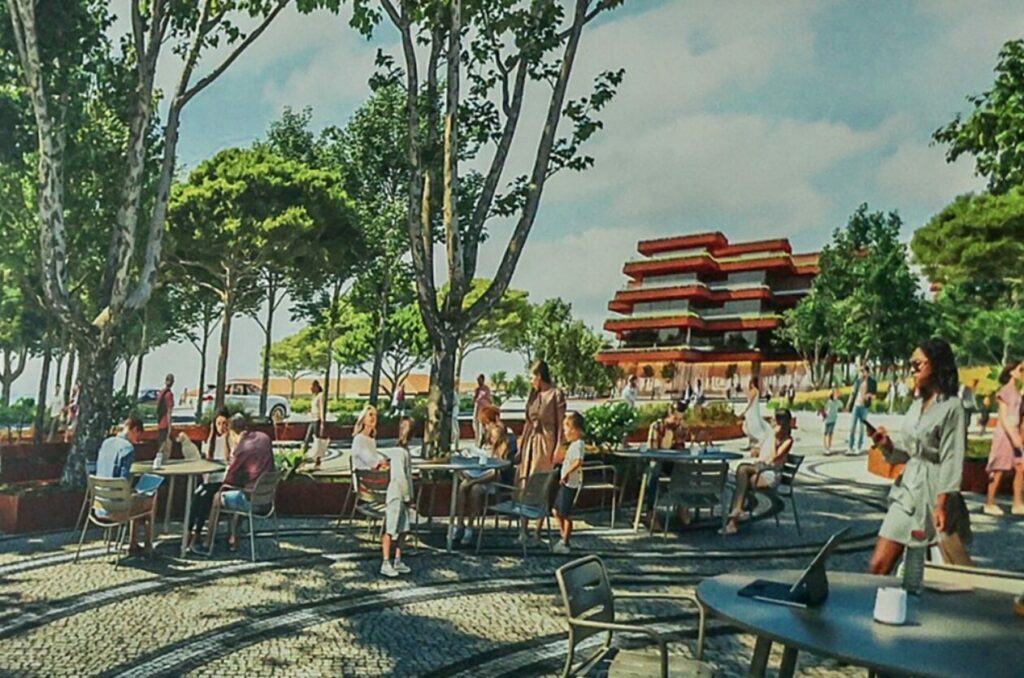
The new development will consist of two sculptural buildings rather than a single massive block, creating a more permeable and human-scaled urban presence. ATÓLL is envisioned as a mixed-use complex combining residential spaces, commercial areas, and generous public zones. A large pedestrian plaza, botanical gardens, and landscaped terraces will integrate the project into Cascais’s coastal environment, reinforcing its position as a benchmark of contemporary architectural design in Portugal. Sustainability is a central principle: materials from the demolished CascaisVilla will be reused in the construction, and the project incorporates advanced energy-efficient technologies and comfort-driven design solutions.
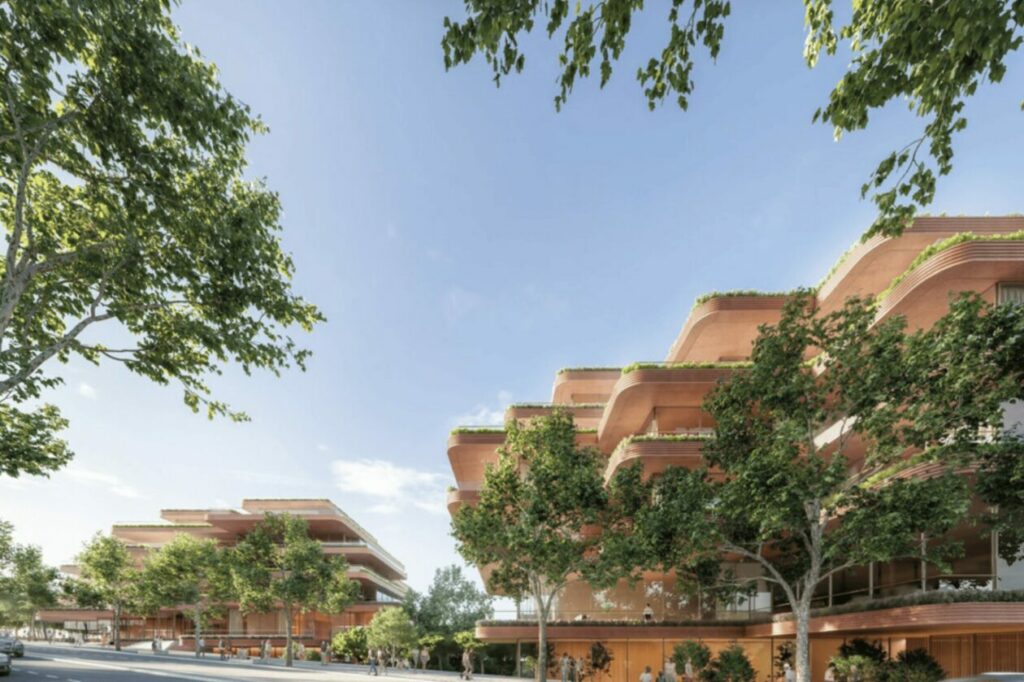
More than a private development, ATÓLL represents a new urban gateway to Cascais. The project coincides with improvements to the surrounding traffic system and the reconfiguration of Avenida D. Pedro, allowing the area to shift from car-dominated infrastructure to a more welcoming, walkable public space. With an estimated investment of around 100 million euros and an expected completion date in 2028, ATÓLL positions Cascais within the international conversation on innovative contemporary architecture.
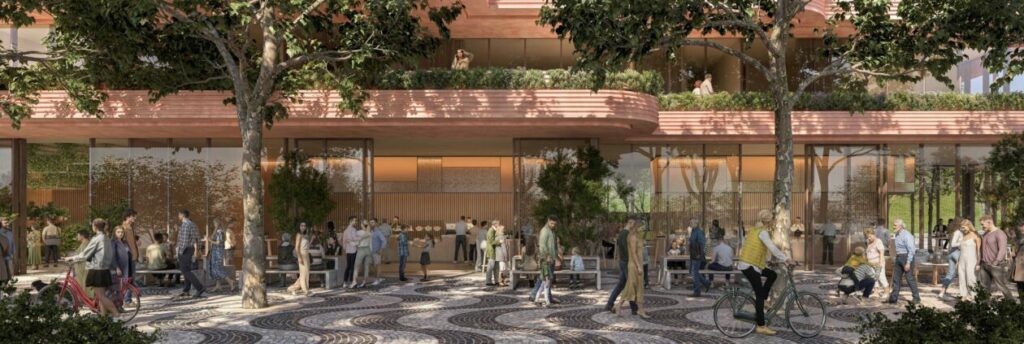
For Cascais, this is not simply another building—it is a future landmark. ATÓLL introduces Norman Foster’s architectural language to the town for the first time, bringing global design excellence into dialogue with the Portuguese landscape. The result promises to be a refined, sustainable, and culturally significant contribution to Portugal’s evolving contemporary architectural scene.
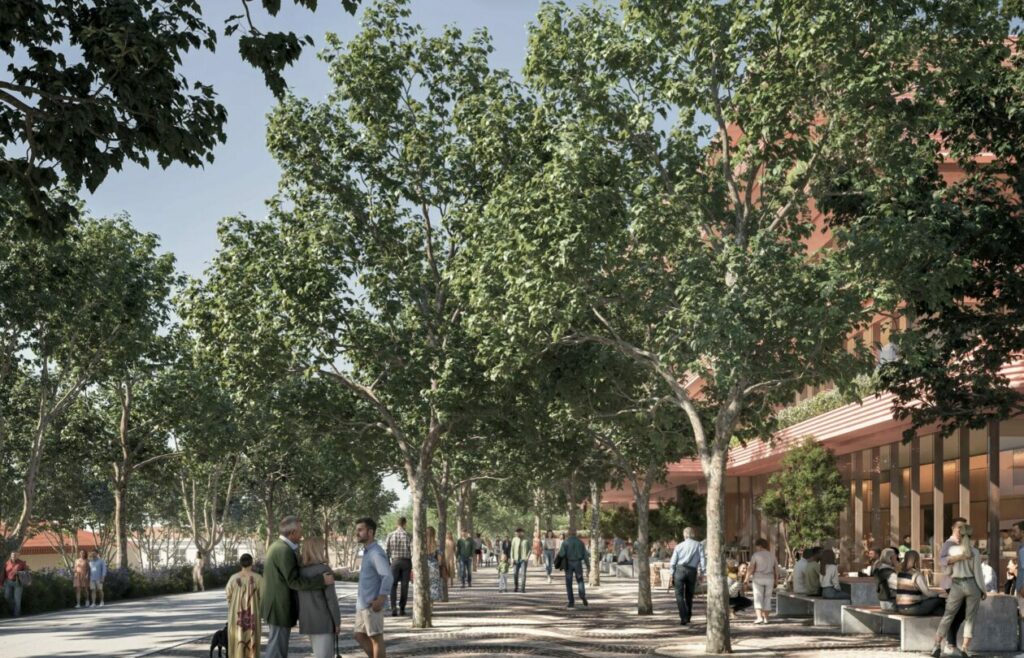
Does Bom Sucesso constitute the most permanent contemporary architecture exhibition?
At the begining of the 21st century, a very special residential resort appeared in Portugal: Bom Sucesso Resort.
Located south of Óbidos Lagoon, it was designed as a living experiment in contemporary architecture.
600 houses were planned (about 200 remain unfinished), featuring 65 different architectural designs by a group of 23 mainly Portuguese contemporary architects — including three Pritzker Prize winners: Álvaro Siza Vieira (1992), Eduardo Souto de Moura (2011), and David Chipperfield (2023).
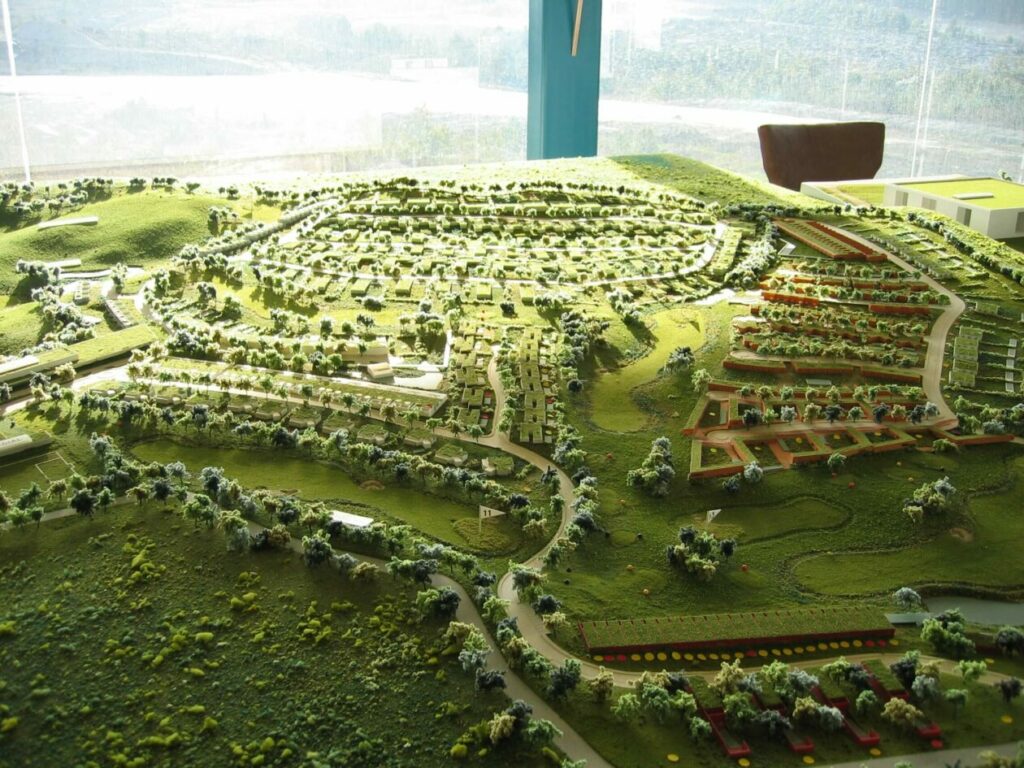
These houses were created for both permanent living and holiday escapes, forming a unique blend of modern architecture and golf resort life.
Bom Sucesso was advertised: “Bom Sucesso will constitute the most permanent contemporary architecture exhibition.”
But is this really true?
Let’s see how it compares to other famous modern architectural neighborhoods around the world.
1. Weissenhof Estate, Stuttgart, Germany (1927)
One of the earliest and most influential experiments in modern housing, the Weissenhof Estate was a showcase of new architectural ideas 1927.
Álvaro Siza Vieira mentioned Weissenhof as an inspiration for the concept behind Bom Sucesso Resort.
Buildings: 33 buildings (around 60 homes)
Architects: 17, including Le Corbusier, Walter Gropius, J.J.P. Oud, Mart Stam, and Bruno Taut
Style: Flat roofs, ribbon windows, open-plan interiors — the essence of Neues Bauen (“New Building”)
Significance: Built in just a few months for a housing exhibition curated by Ludwig Mies van der Rohe. It has still impact today!
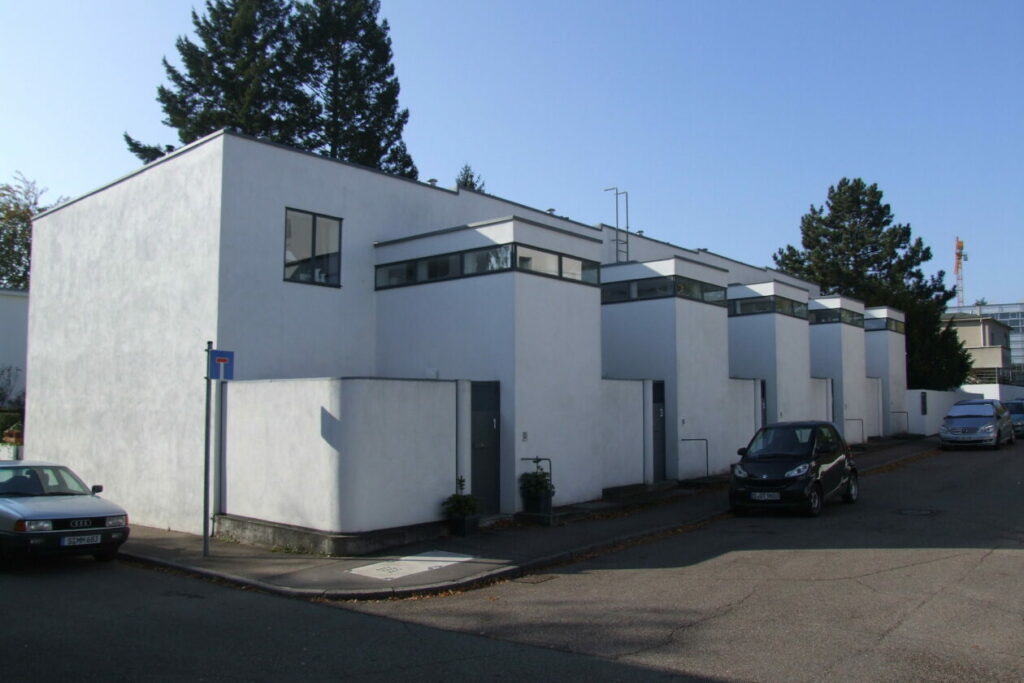
Image from Flickr: Dāvis Kļaviņš
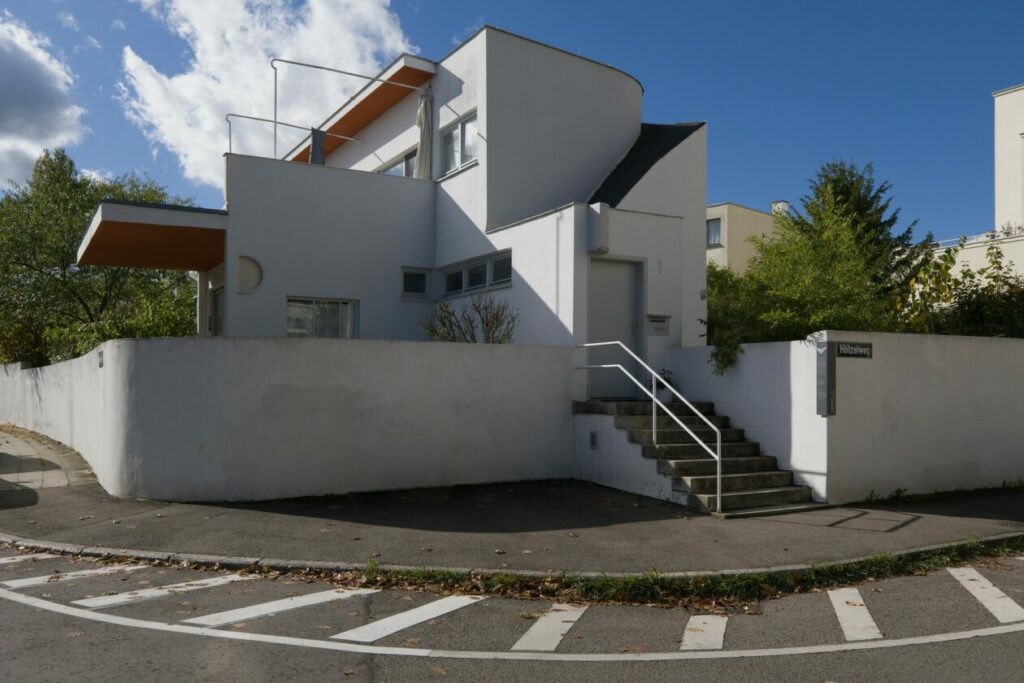
Hans Scharoun (1926), Image from Flickr – Rob Oo
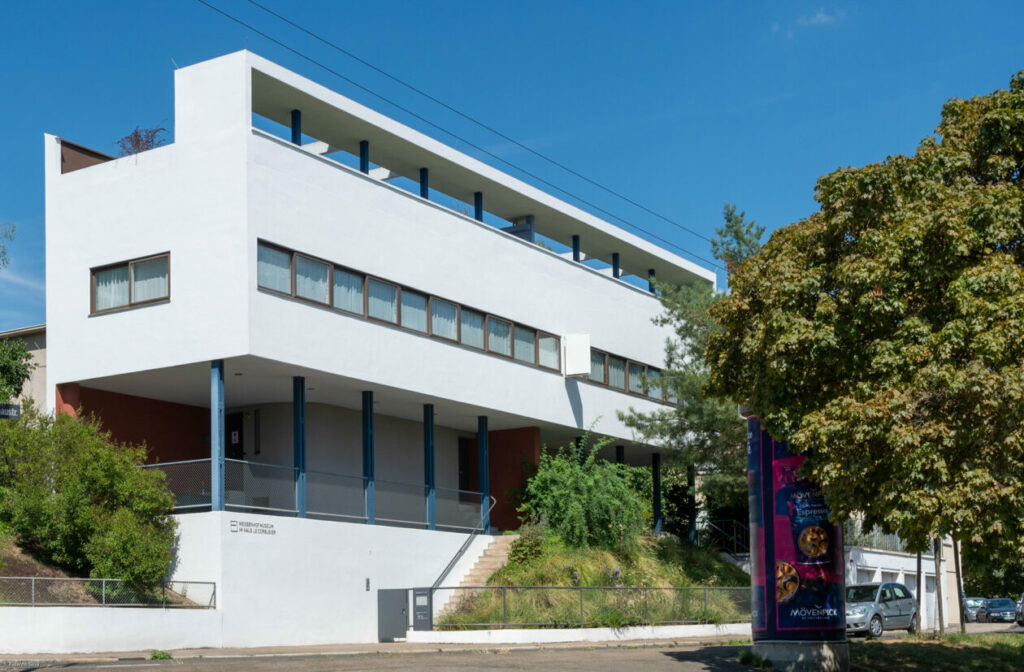
Le Corbusier House, Image from Flickr xiquinhosilva
Comparison: Bom Sucesso is larger in number of houses, but Weissenhof remains a concentrated and historic showcase, defining modern architecture in its time.
2. White City, Tel Aviv, Israel (1930s–1950s)
The White City of Tel Aviv is the world’s largest collection of Bauhaus-style buildings. After World War II, many architects brought modernist ideas to the new city.
Buildings: Over 4,000 apartments
Architects: Arieh Sharon, Zeev Rechter, Dov Karmi, and others
Style: Bauhaus / International Style — flat roofs, cubic forms, roof terraces for climate adaptation
Significance: Recognized as a UNESCO World Heritage Site (2003) for its modernist urban planning.
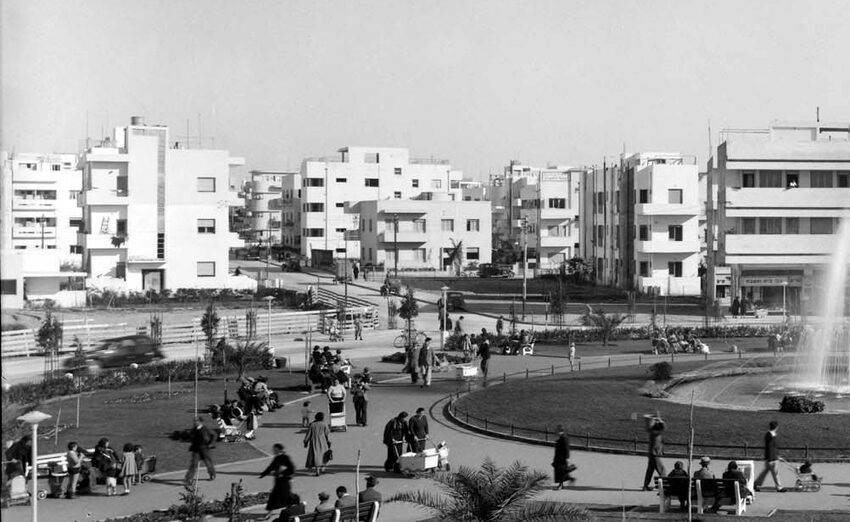
Image from a publication of Ariel Noyman POWERSTRUCTURES: the urban form of regulations
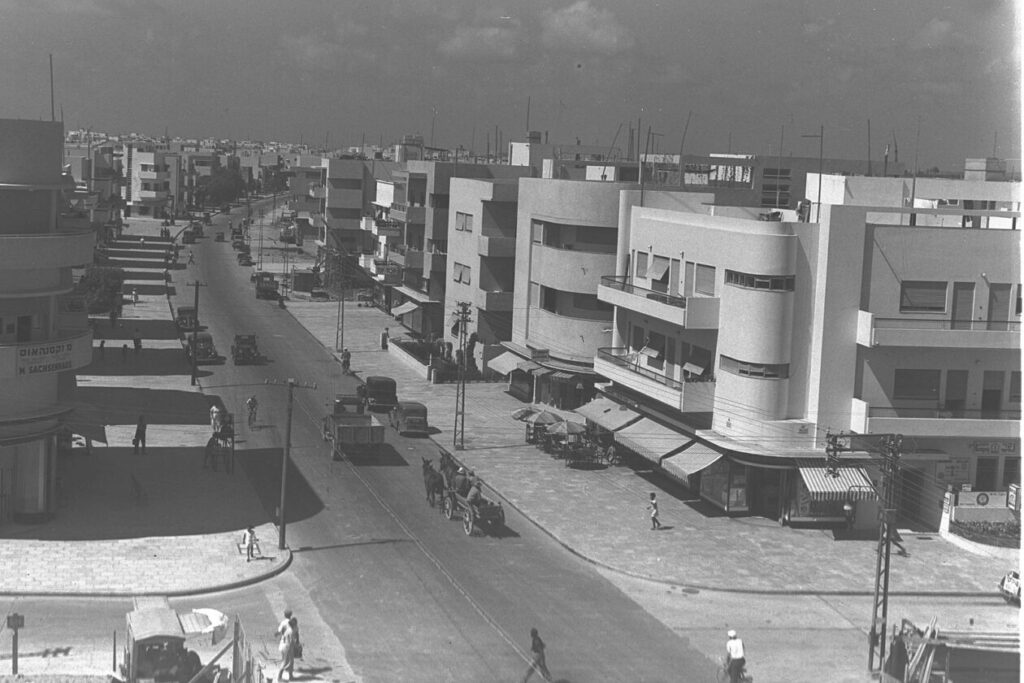
Image Wikipedia Zoltan Kluger
Comparison: White City is enormous and urban, composed mostly of apartment blocks (3–5 stories).
Bom Sucesso, in contrast, is a resort of individual villas, each with its own architectural identity — more private, experimental, and design-driven.
3. Eichler Homes, California, USA (1949–1970s)
Developer Joseph Eichler built thousands of mid-century modern houses across California, introducing modernist design to suburban America.
Number of houses: ~11,000 in total i the US, the City Palo Alto alone has about 2,700 and The Highlands in San Mateo includes ~650 Houses in just one community.
Architects: Anshen + Allen, Claude Oakland, Jones & Emmons, A. Quincy Jones, and Robert Anshen
Style: Open floor plans, post-and-beam construction, glass walls, and seamless indoor–outdoor living
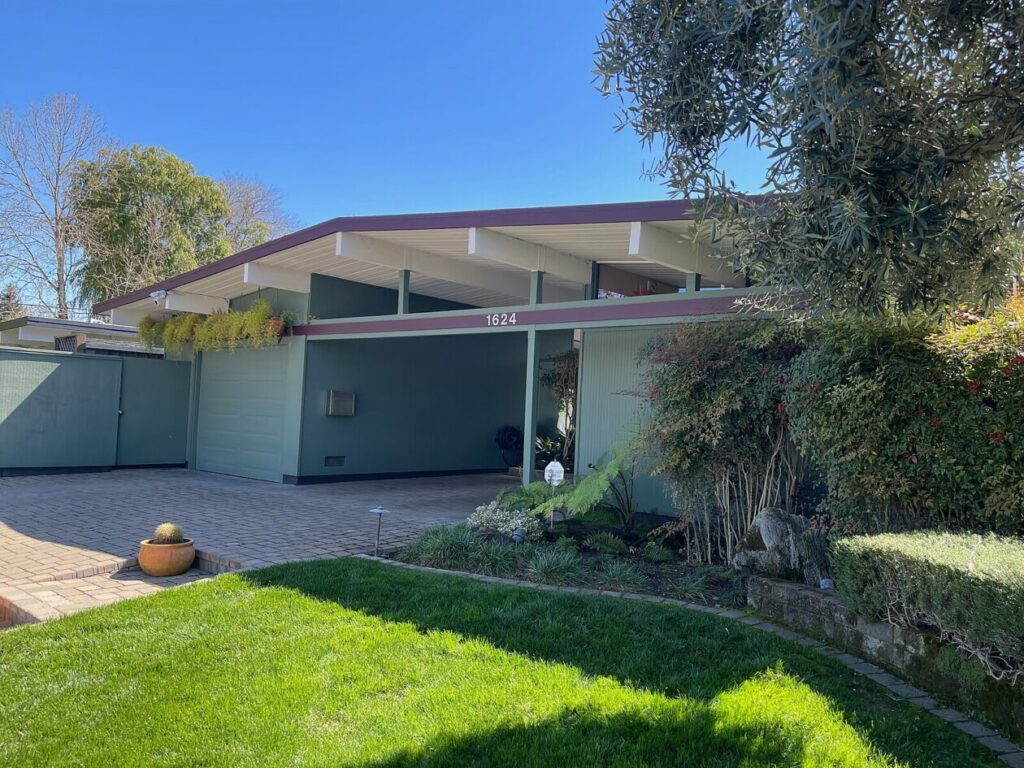
Image Wikipedia Greghenderson2006
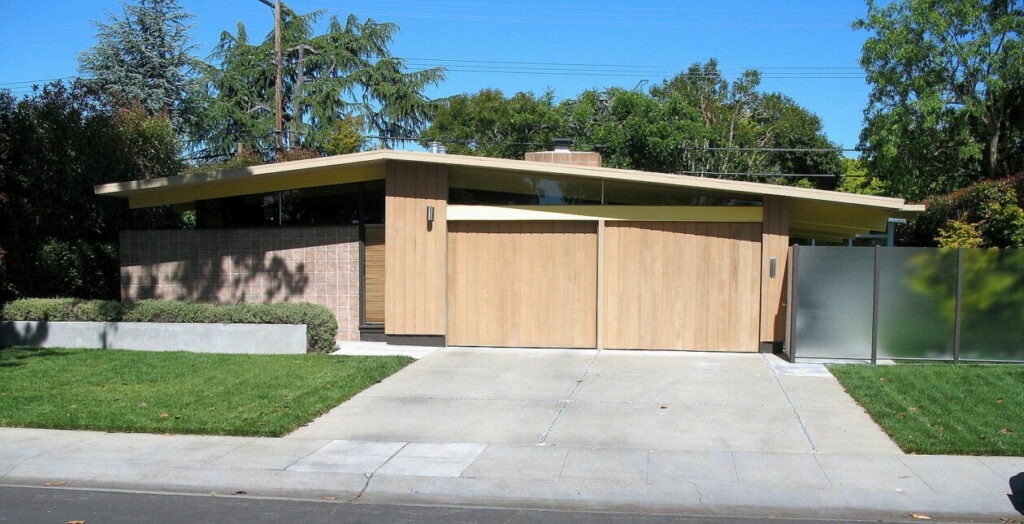
Image Wikipedia Sanfranman59
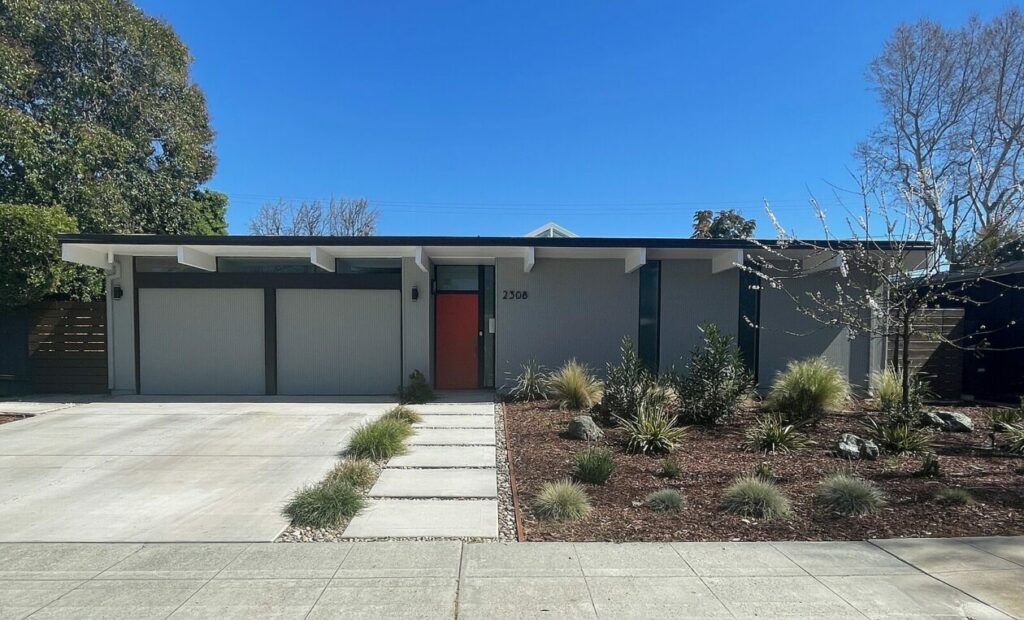
Image Wikipedia Greghenderson2006
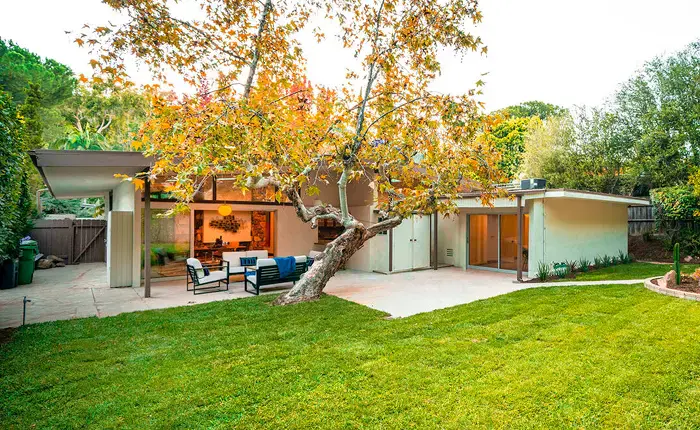
Comparison: Eichler’s developments were built for the middle class and spread over many neighborhoods.
Bom Sucesso, by contrast, is smaller in total number.
4. Palm Springs, California, USA
Palm Springs is a paradise of mid-century modernism, with entire neighborhoods designed in the modern style by architectural icons.
Number of homes: Several thousand across neighborhoods like Vista Las Palmas, Deepwell, and Sunmor
Architects: Richard Neutra, Albert Frey, William Krisel, John Lautner, E. Stewart Williams, Donald Wexler
Style: Desert-adapted modernism, indoor–outdoor flow, and minimalist geometry
Significance: Known for celebrity and magazine homes, multiple important landmark buildings.
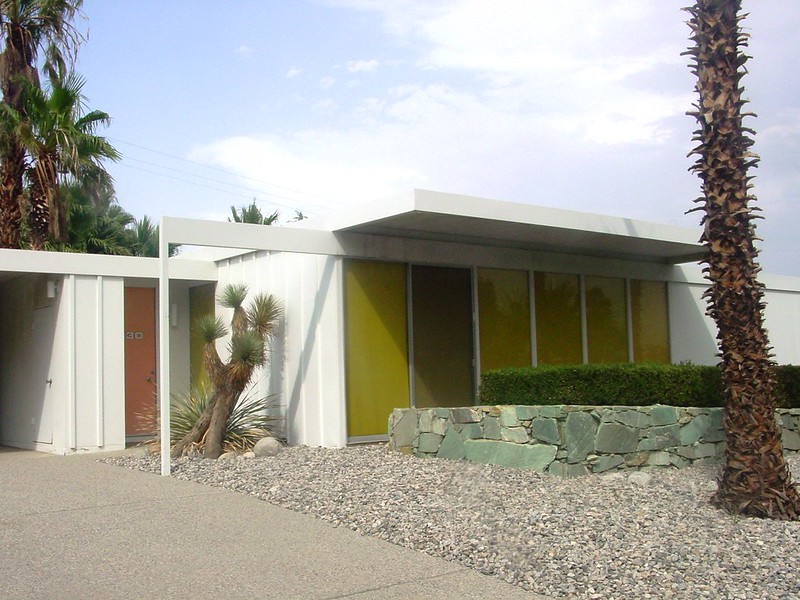
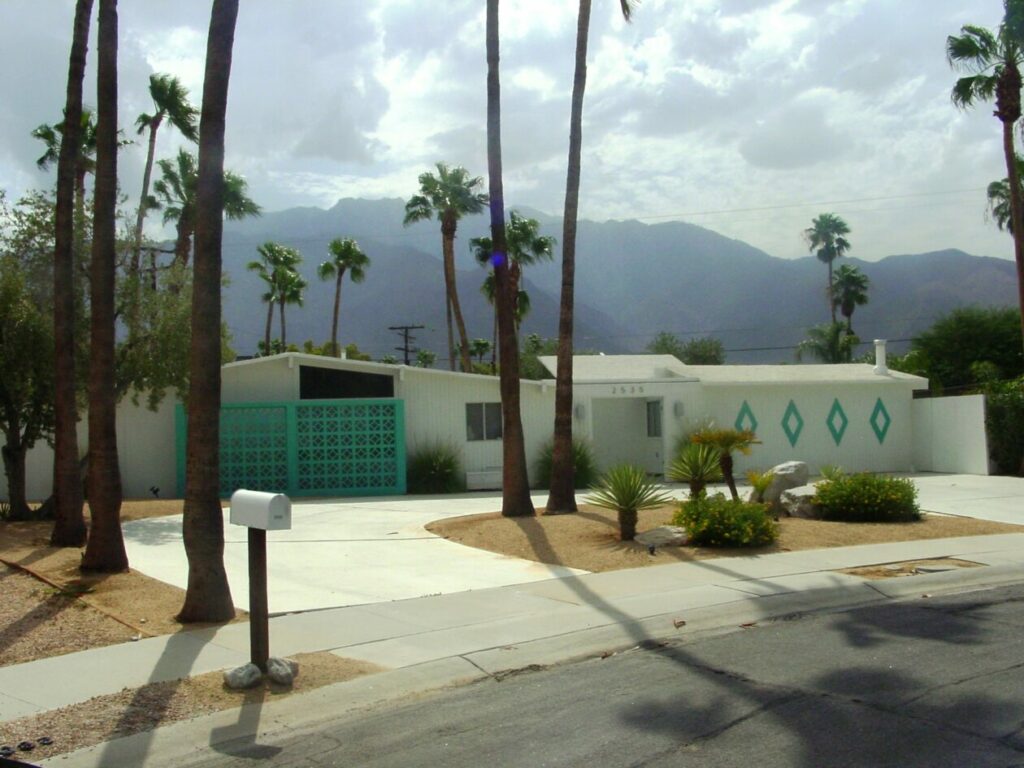
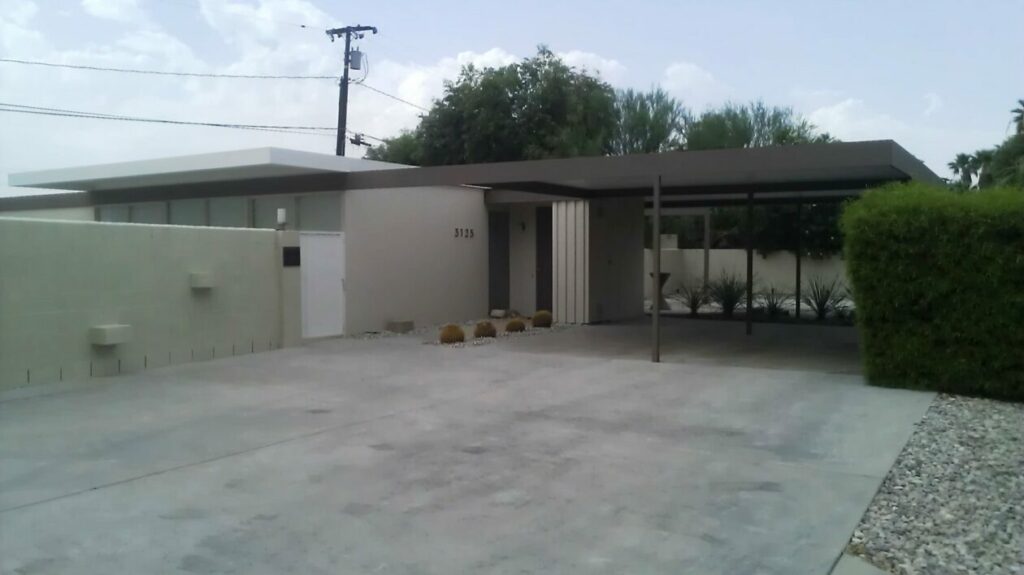
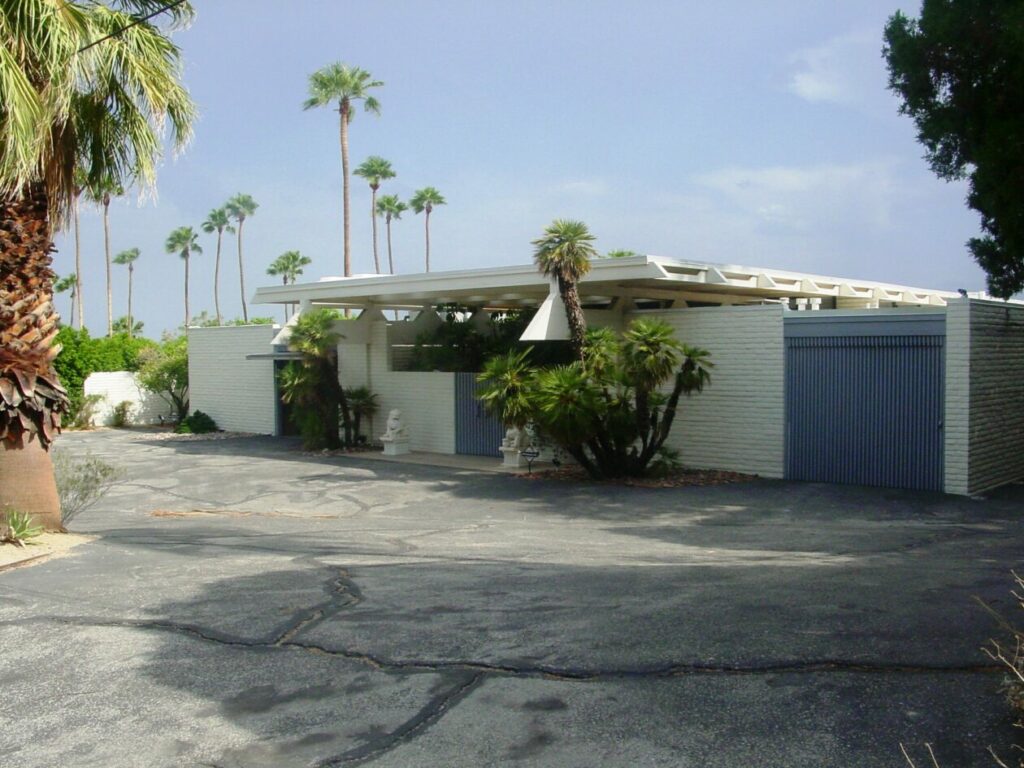
Images from Flickr Kansas Sebastian
Comparison: Like Bom Sucesso, Palm Springs feels like a “living exhibition.”
However, it grew organically over decades, not as one master-planned project — and its architectural language reflects mid-century America, not contemporary Europe.
So, Is Bom Sucesso the Largest?
In Europe, Bom Sucesso stands out as the largest contemporary housing exhibition ever built.
Globally, Palm Springs or the Eichler Home Communities may surpass it in total numbers — but Bom Sucesso is unique:
- It represents two generations of Portuguese post modern to contemporary architecture, from the Porto and Lisbon School.
- It brings together three Pritzker Prize winners within a 1.5 km radius.
- It is focused on Architecture Holiday Villa Designs.
Bom Sucesso is some thing very special and the largest contemporary housing exhibition in Europe.
Just 15 minutes from Lisbon, Utopia is a modern residential neighborhood where architecture, landscape, and life come together.
Coordinated by Manuel Aires Mateus, the project brings together some of the best contemporary Portuguese architects, including Francisco Aires Mateus, Alberto Souza Oliveira, Goncalo Byrne, Eduardo Souto de Moura and António Rodrigues, among others. Their collaboration created a neighborhood where each house is unique but part of a harmonious whole.
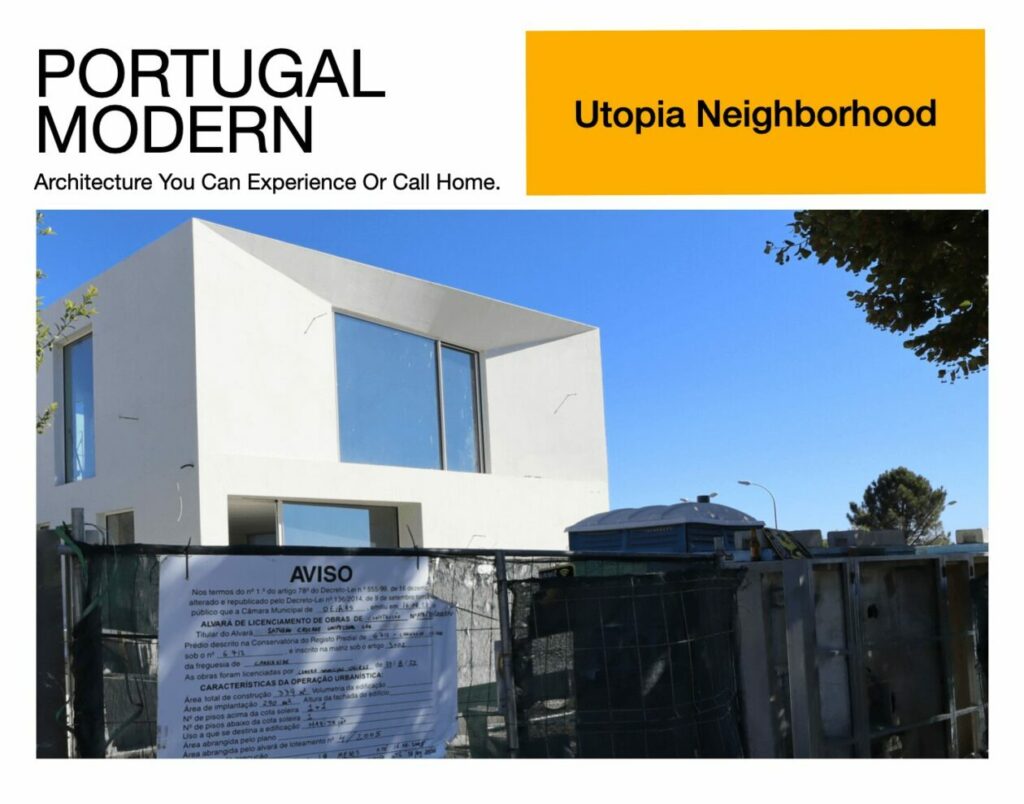
Utopia is made up of 45 + single-family homes, carefully arranged across six main plots to balance built spaces and open areas. This approach maximizes light, views, and privacy, while creating a seamless relationship between indoor and outdoor spaces.
Utopia is more than just a collection of homes. It is a vision of the future. Each house is a work of art, contributing to a neighborhood that is unique, harmonious, and unforgettable.
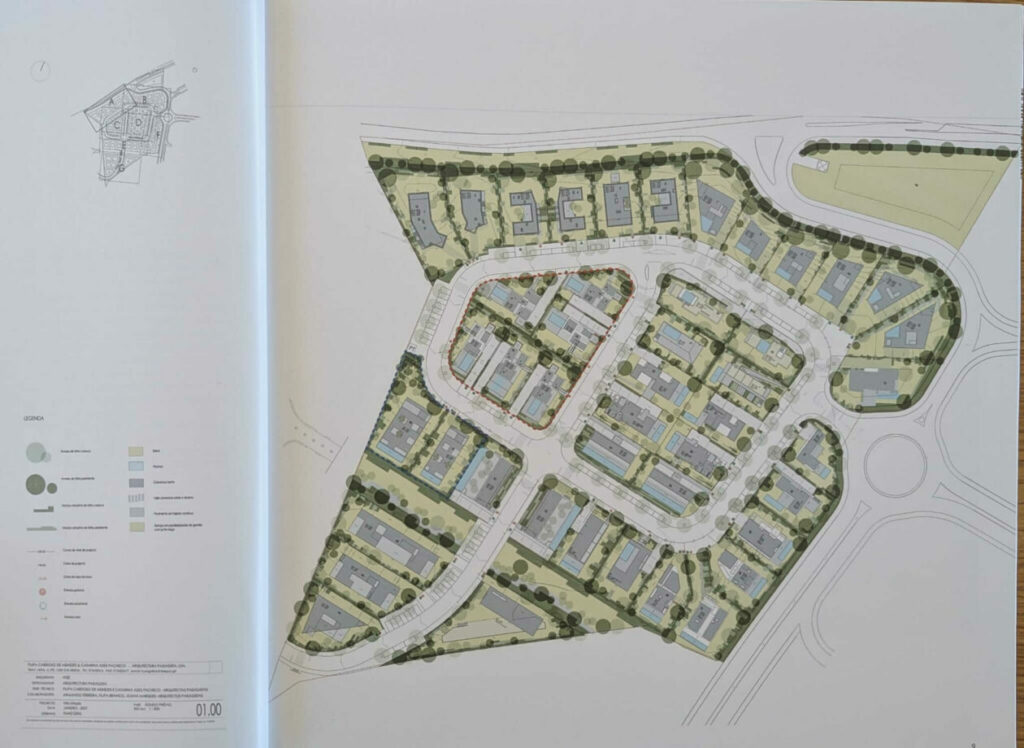
Image from Utopia 1, Manuel Aires Mateus, ISBN:9789896582135
Google Maps Pin here
Utopia Villa 1 by Francisco Aires Mateus
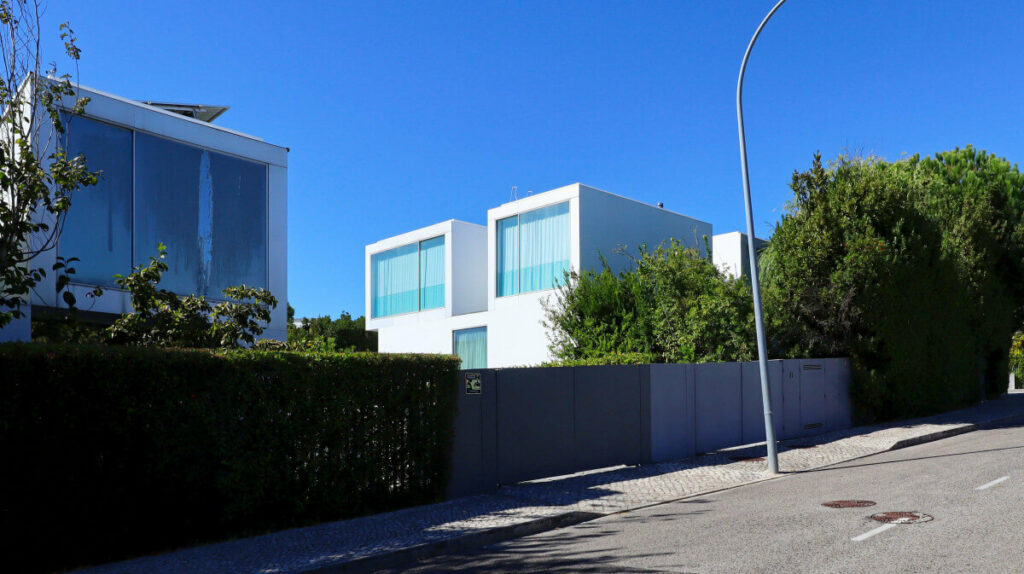
Utopia Villa 2 – Architect Unknown
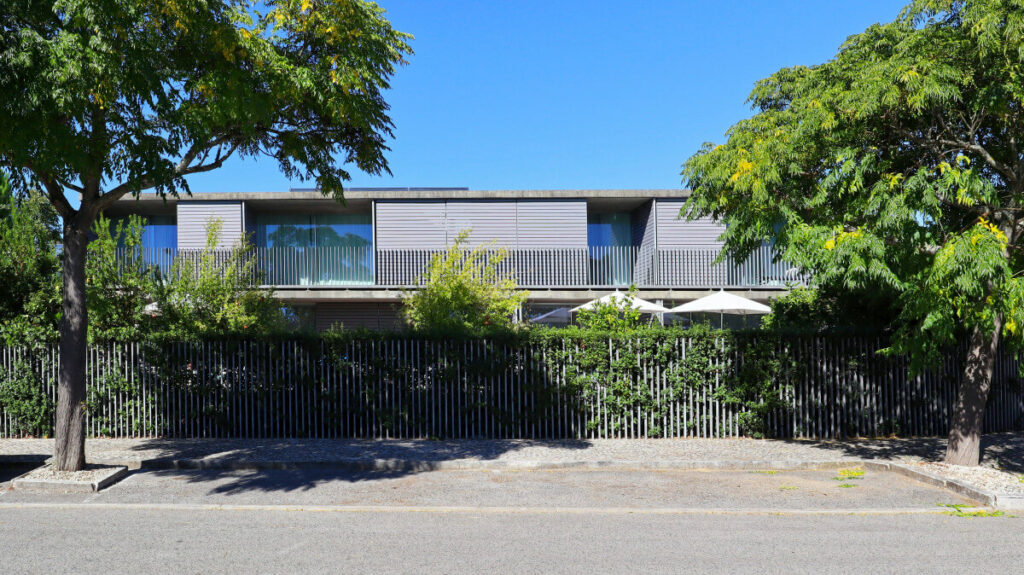
Utopia Villa 3 by Gonçalo Byrne
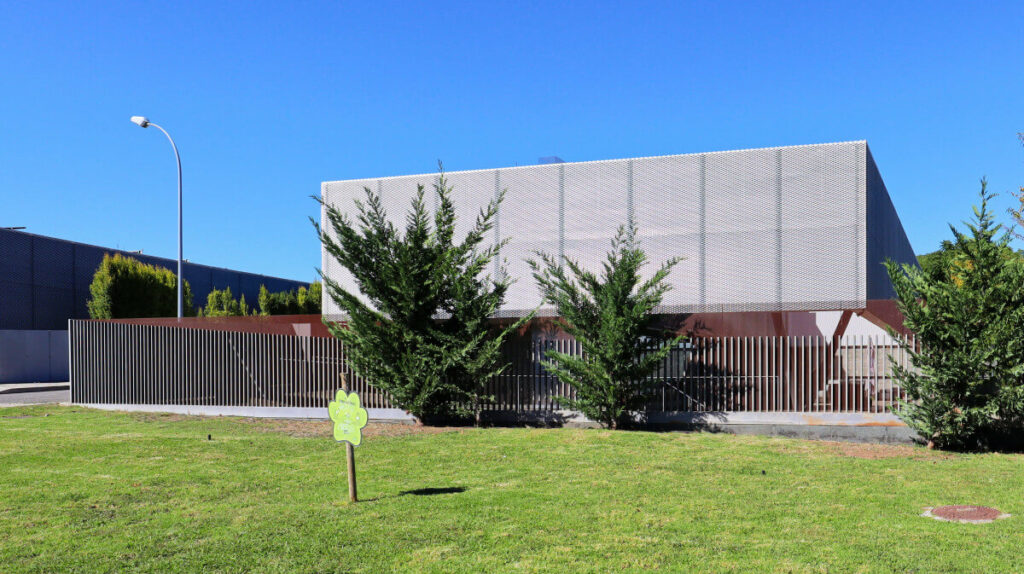
Utopia Villa 5 – Architect Unknown
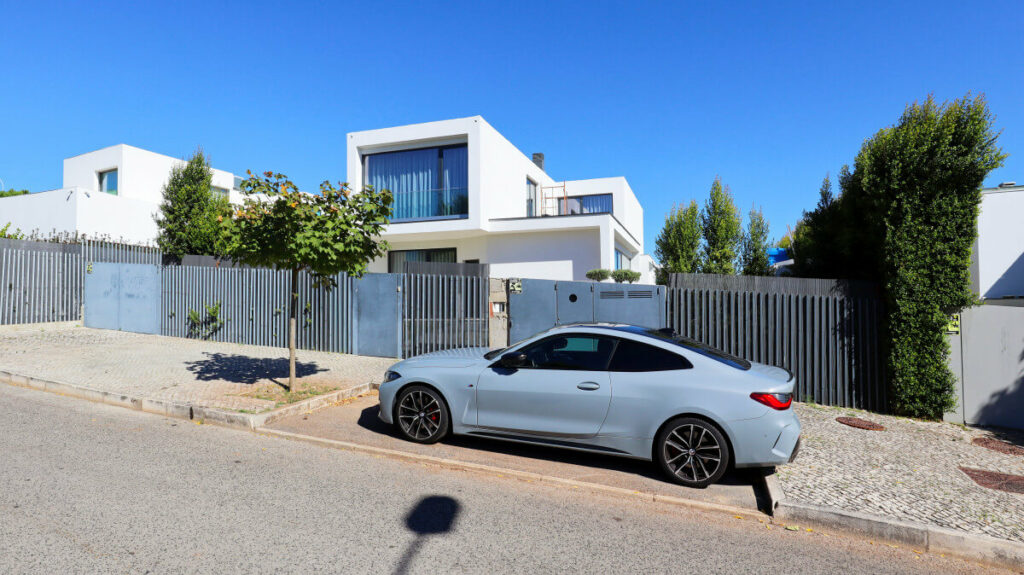
Utopia Villa 6 – Unknown Architect
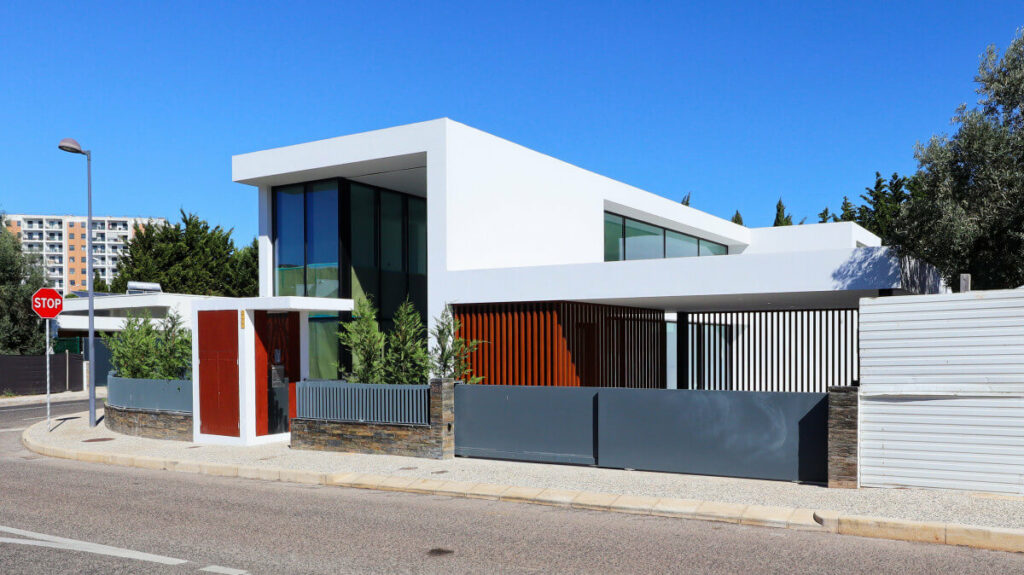
Utopia Villa 7 by Eduardo Souto de Moura (assumption)
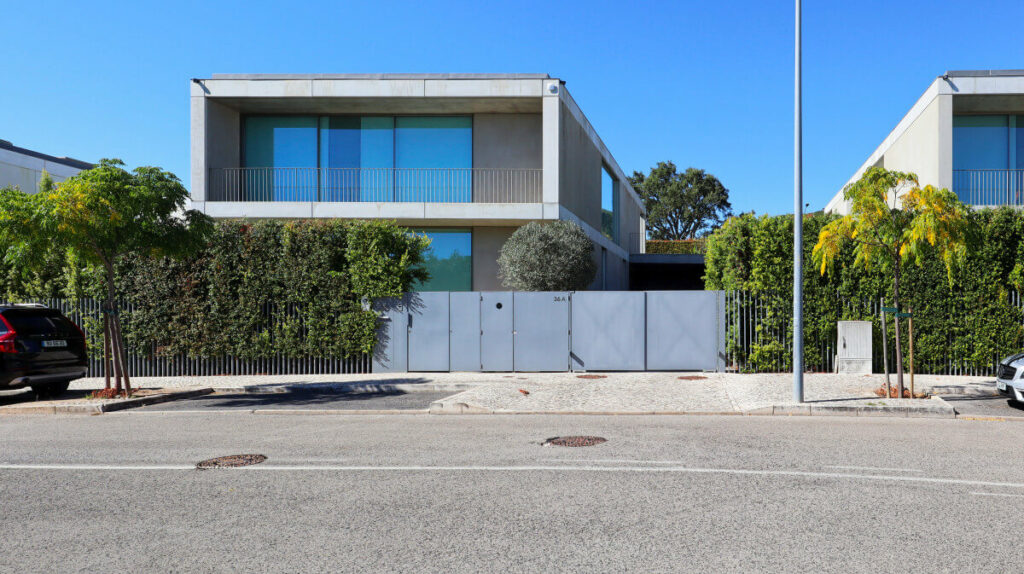
Utopia Villa 8 – Unknown Architect
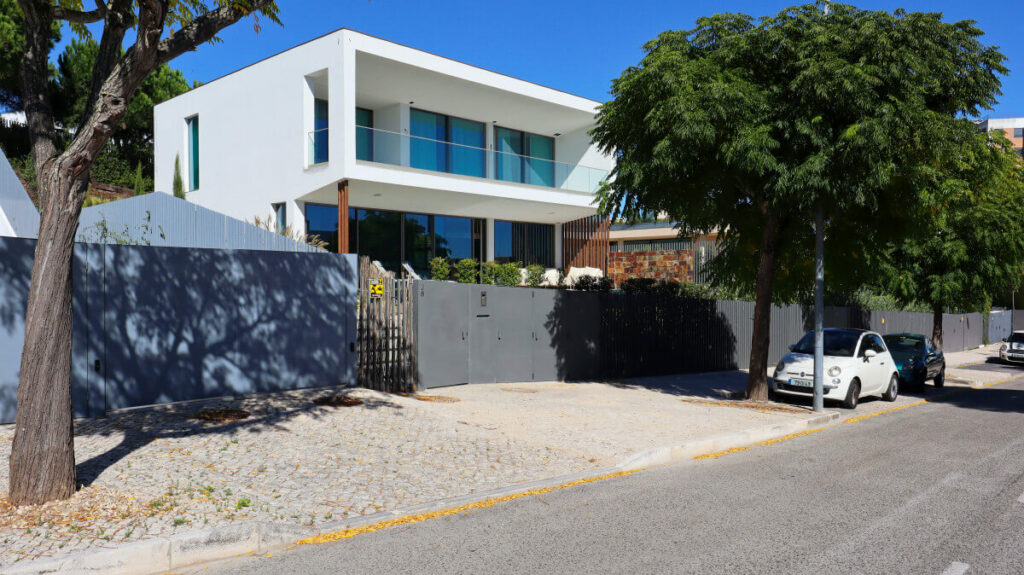
Utopia Villa 9 – Unknown Architect
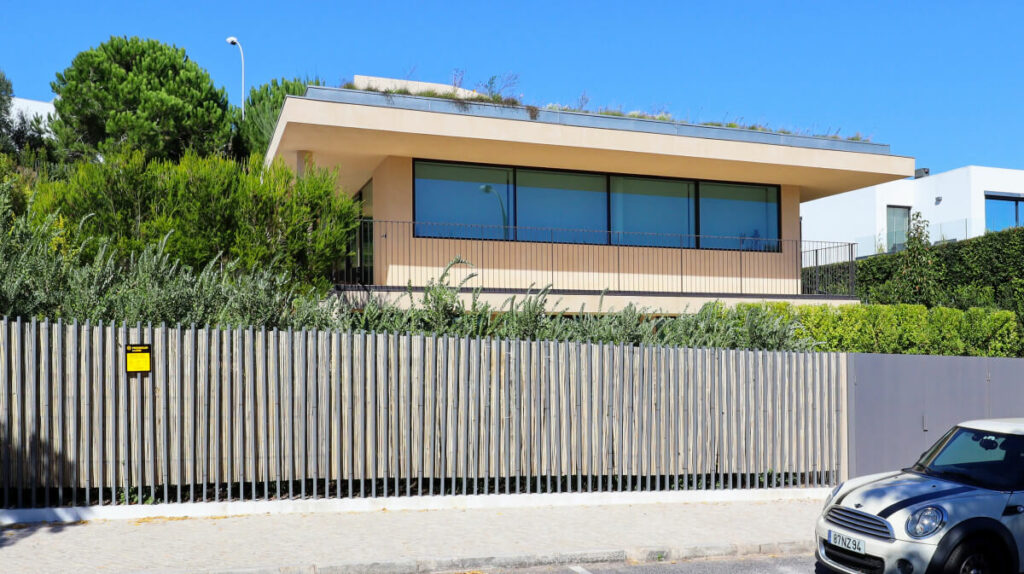
Utopia Villa 10 – Unknown Architect
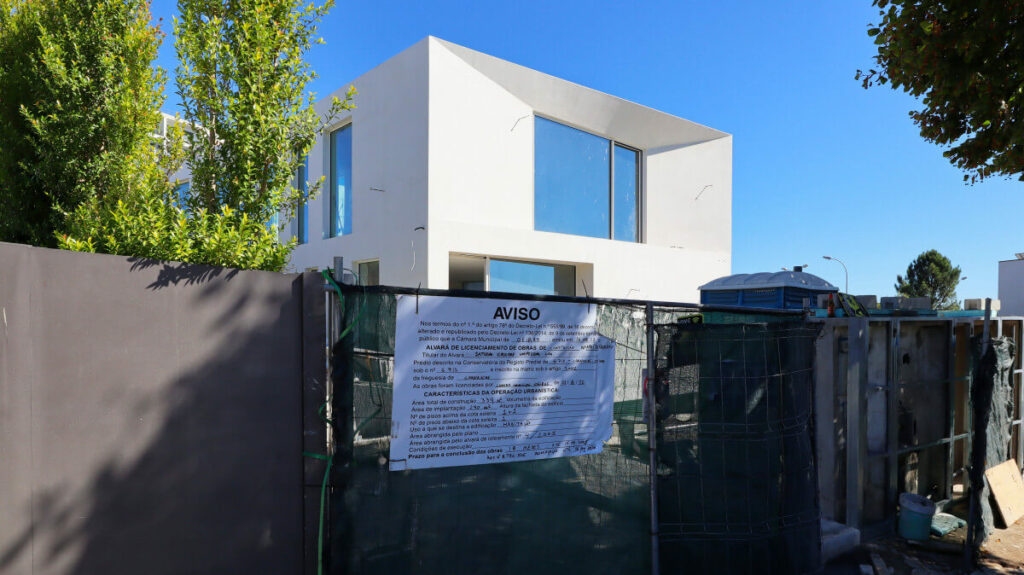
Utopia Villa 11 – Unknown Architect
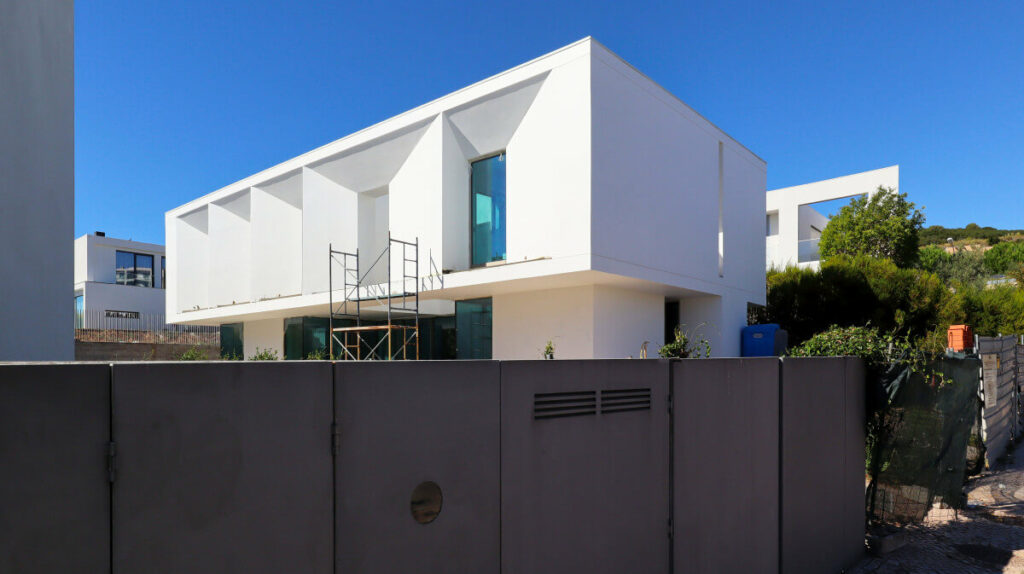
Utopia Villa 12 – Unknown Architect
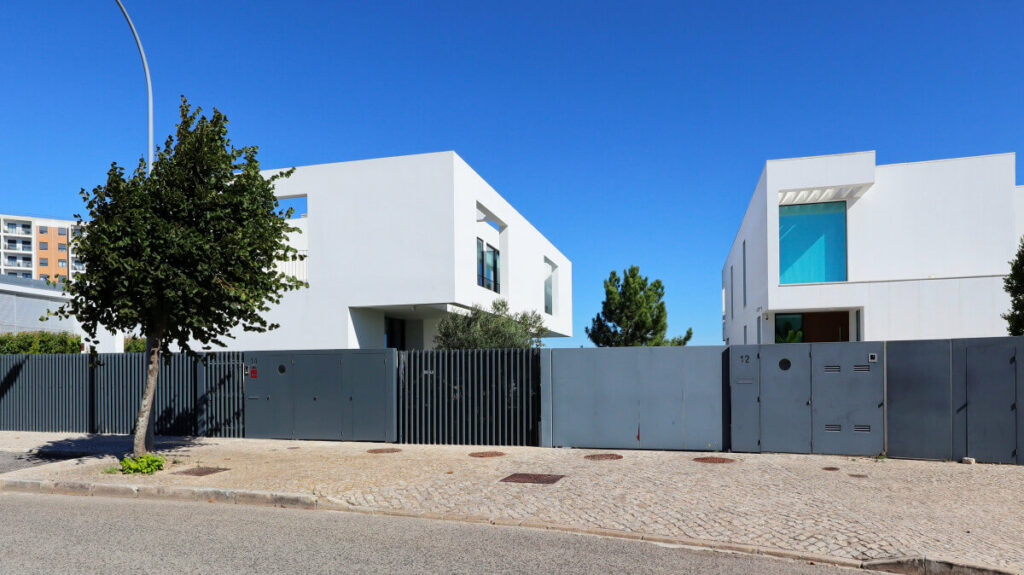
Utopia Villa 13 – Unkown Architect
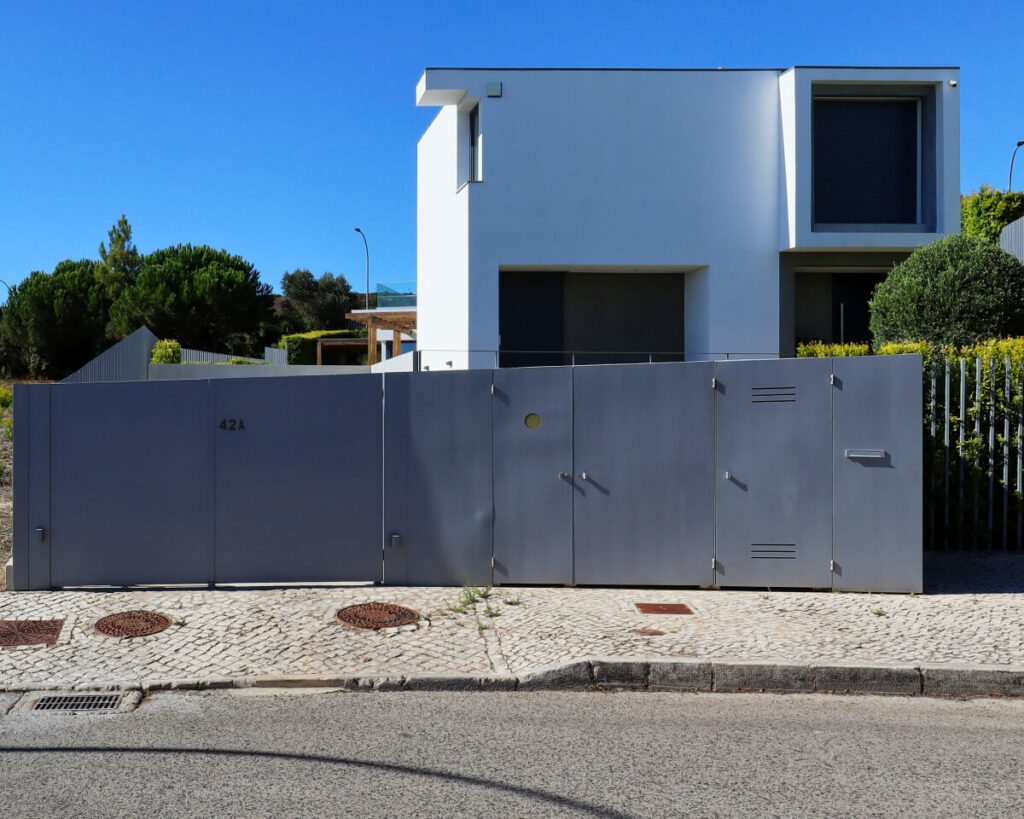
Utopia Villa 14 – Unkown Architect
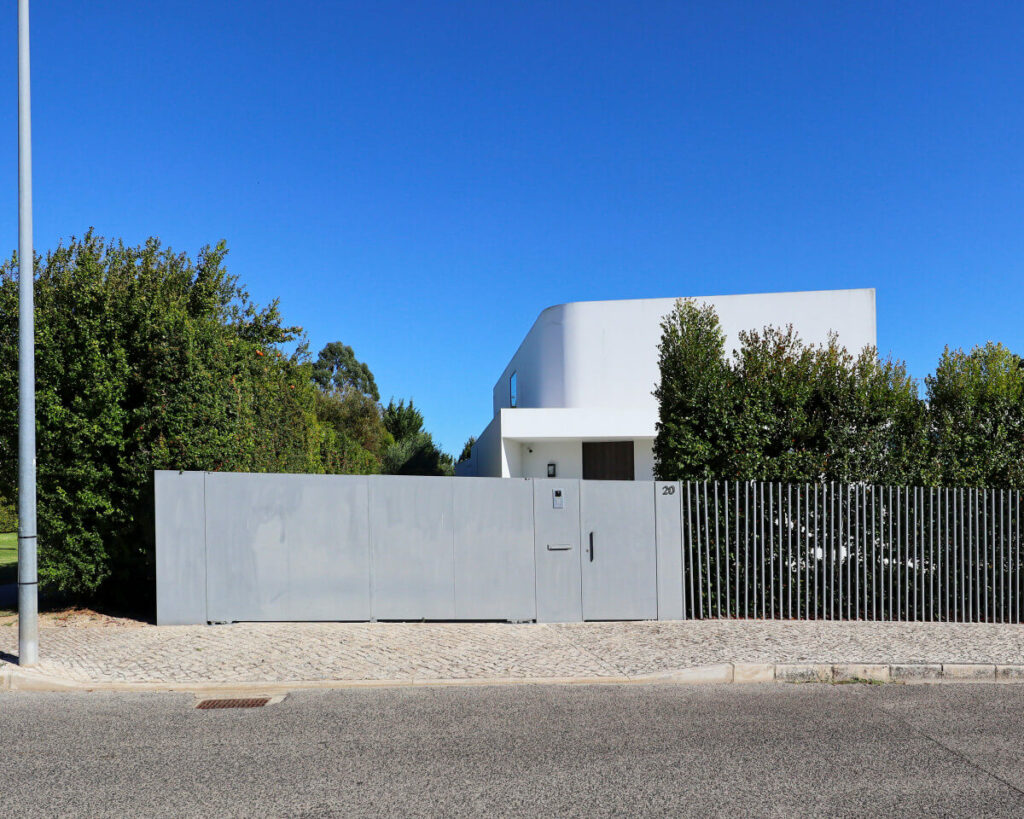
Utopia Villa 15 – Unkown Architect
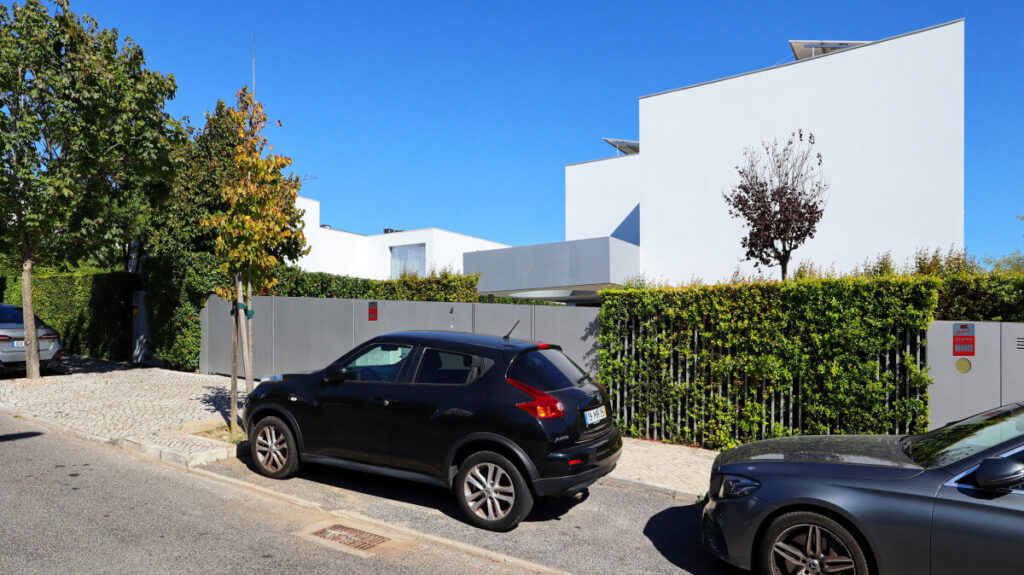
Utopia Villa 16- Unkown Architect
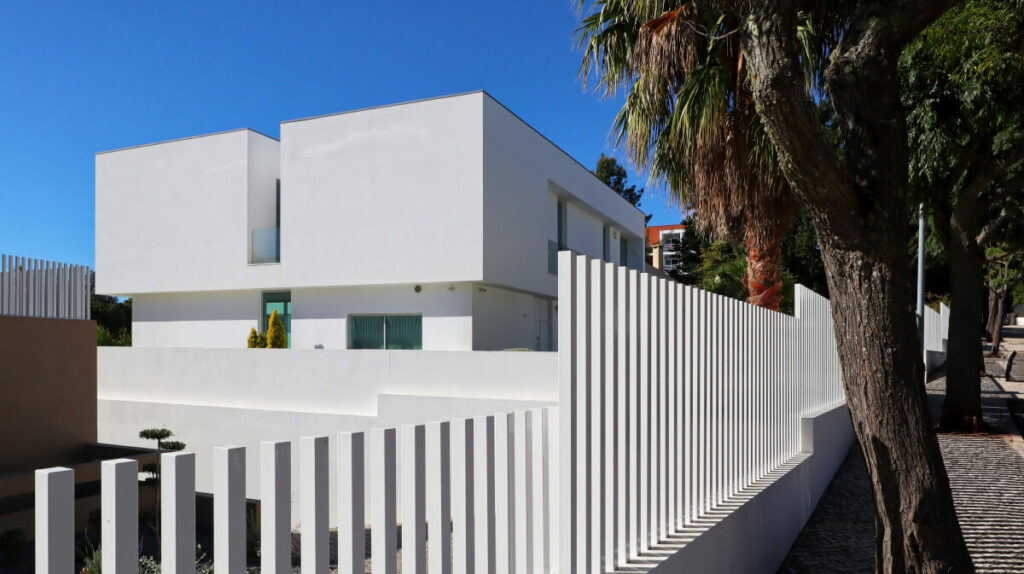
Utopia Villa 17 – Unkown Architect
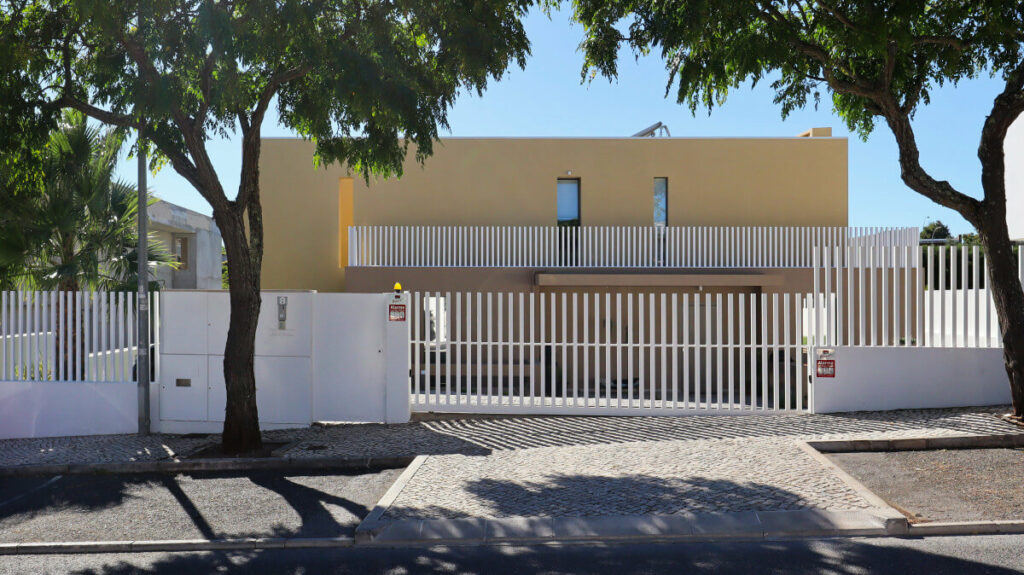
Utopia Villa 18 – Unkown Architect
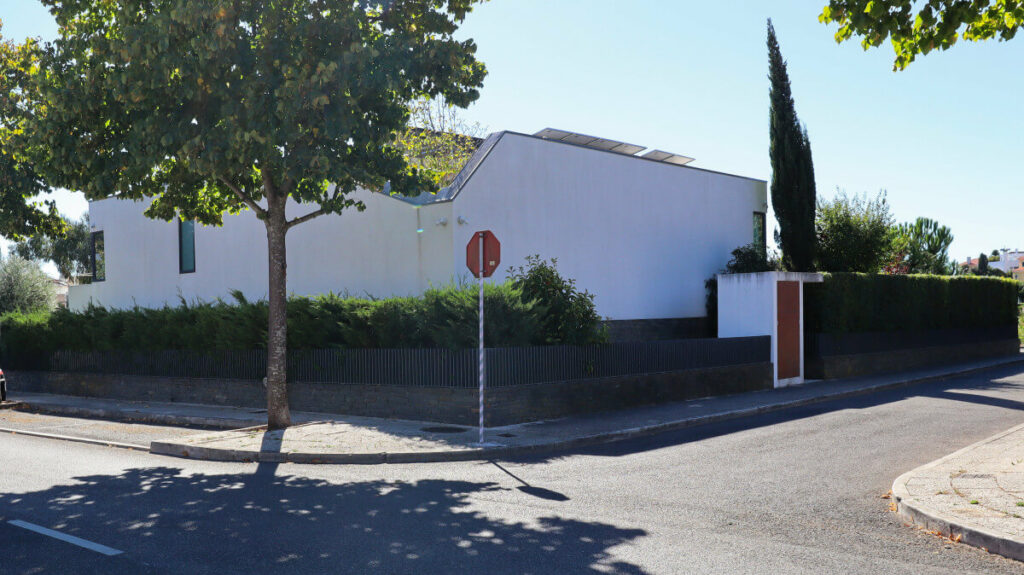
Utopia Villa 19 – Unkown Architect
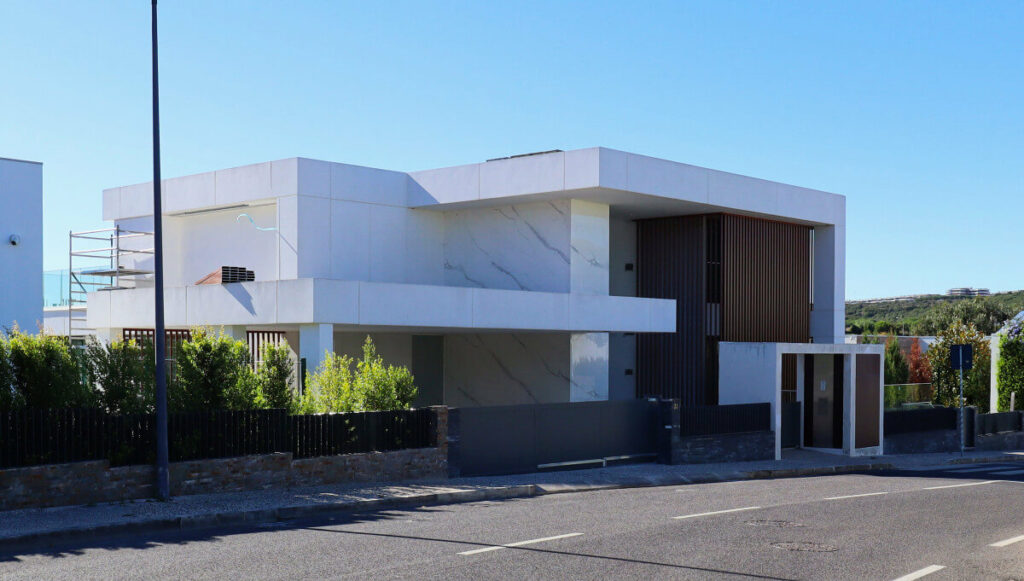
Dates: November 7–9, 2025
Location: Faro, Portugal
This November, the city of Faro will once again become a meeting point for architecture lovers from Portugal and abroad. The Modernist Weekend — now a highlight of the Algarve’s cultural calendar — celebrates the city’s mid-century architectural heritage through three days of guided tours, open houses, exhibitions, and lively discussions.
Organized by The Modernist Faro in collaboration with Picada Cultural and supported by the Faro Municipality, this event is dedicated to exploring the beauty and value of Portuguese Modernism — a movement that shaped the identity of cities across the country between the 1950s and 1970s.
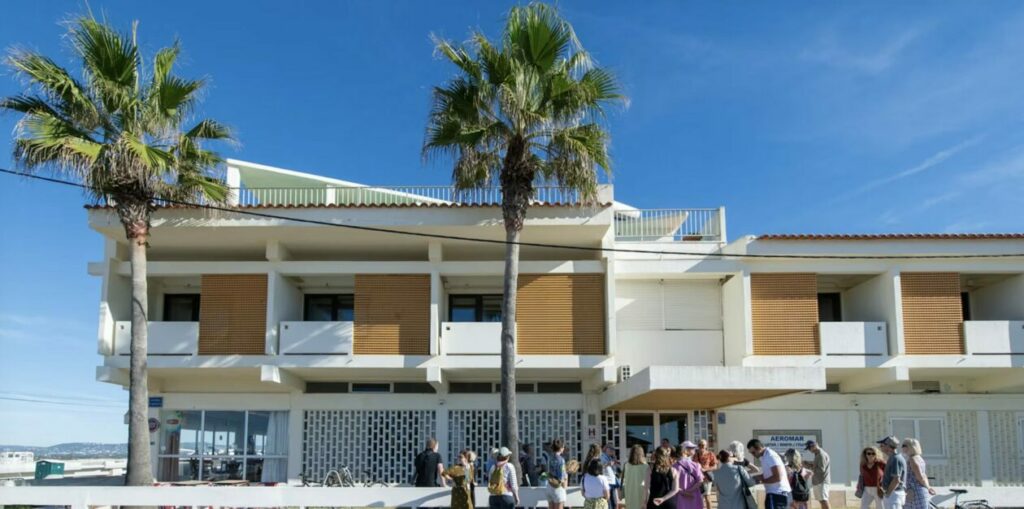
Picture from TheModernistWeekend.com
A Weekend Dedicated to Modernist Architecture
Throughout the weekend, visitors can explore Faro’s architectural gems — from iconic buildings to lesser-known treasures. The program combines walking tours, private home visits, and art exhibitions that reflect the creative optimism of Portugal’s postwar years.
Participants will walk through the city’s sunlit streets, discover houses that blend geometry and light, and meet the people who are keeping this heritage alive — architects, artists, and historians who share a deep passion for Modernism.
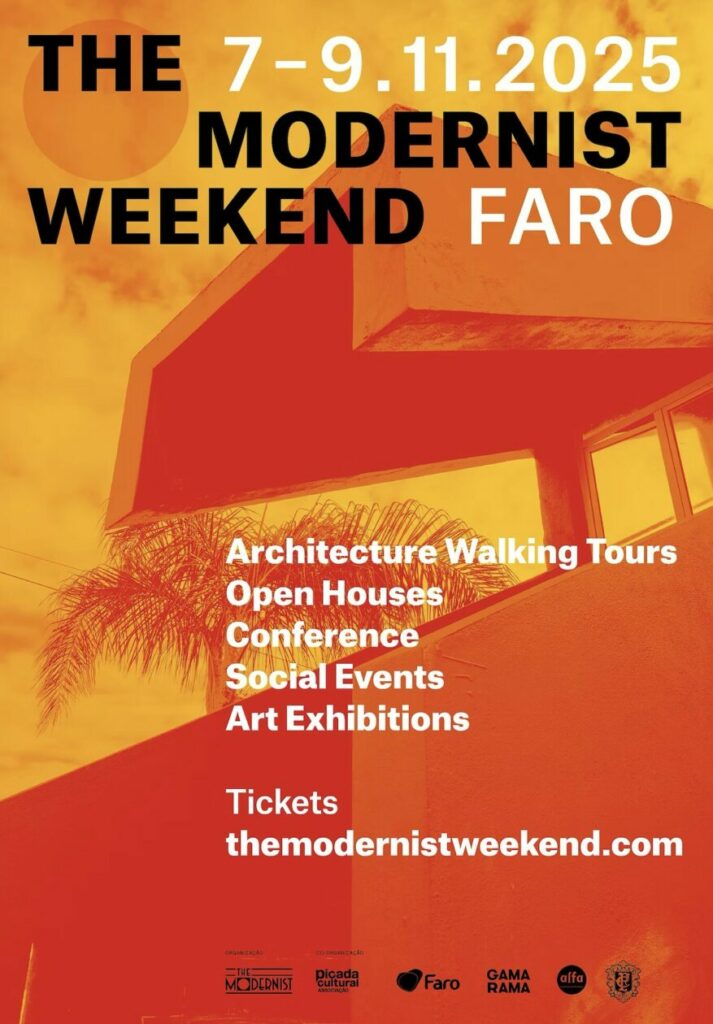
Picture from TheModernistWeekend.com
Event Highlights
Friday, November 7
The opening day begins with a walking tour of Faro’s Modernist buildings led by Chris De Oliveira, co-founder of The Modernist Faro. Another morning tour, The Garden History of Faro, led by landscape professor Sónia Azambuja, explores how garden design evolved alongside architecture.
Later, visitors can step inside some of Faro’s most remarkable homes, such as Casa Gago, guided by architect Victor Hugo Faustino, and the Tridente Building, with Leanne Cloudsdale, founder of Concrete Communities.
In the evening, the focus shifts to art. Two exhibitions open their doors: a photography show on architect Manuel Gomes da Costa and Through the Glass: All Colors, featuring works by Graça Paz and Bruno Grilo at GAMA RAMA Art Gallery, followed by drinks and tapas.
Saturday, November 8
Day two offers more walking tours and discoveries — including From Bauhaus to Beach House on Faro Island and Brutalism Undercover at the University Campus da Penha.
In the afternoon, architect Gonçalo Vargas leads the Roteiro Modernista tour, exploring Rua de Berlim and the Colégio do Alto.
The day ends with a live talk at Club Farense, titled “Modernism + the Algarve: Minority Interest or Public Priority?” — followed by The Modernist Weekend Closing Party, where guests can meet, talk, and dance to DJ music in one of Faro’s historic venues.
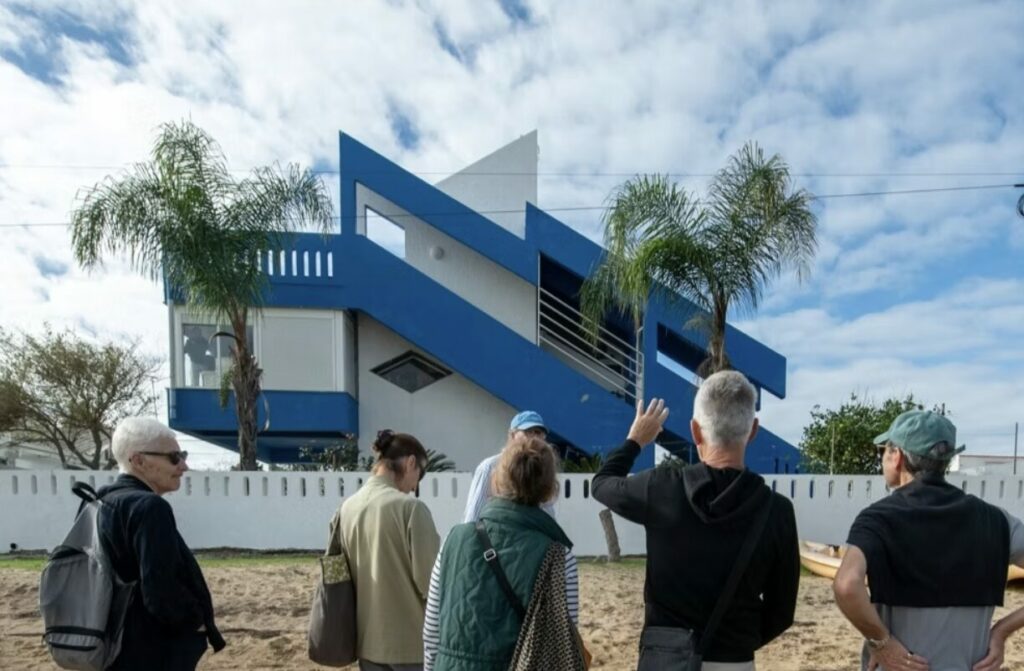
Picture from TheModernistWeekend.com
Sunday, November 9
The final morning offers a relaxed chance to revisit the city’s modernist architecture, with additional walking tours and a second chance to visit Casa Gago or join Victor Hugo Faustino’s Manuel Gomes da Costa tour.
A Celebration with a Purpose
Behind this initiative are Angélique and Christophe De Oliveira, founders of The Modernist Faro, a boutique accommodation that celebrates 20th-century architecture. Since moving to Faro in 2018, they have become strong voices for architectural preservation and have helped put the city on the map for design-conscious travelers.
Their goal is not only to celebrate Faro’s modernist buildings but also to inspire dialogue about how to preserve and reuse them for the future. As they put it, “The Modernist Weekend is more than an event — it’s a community.”
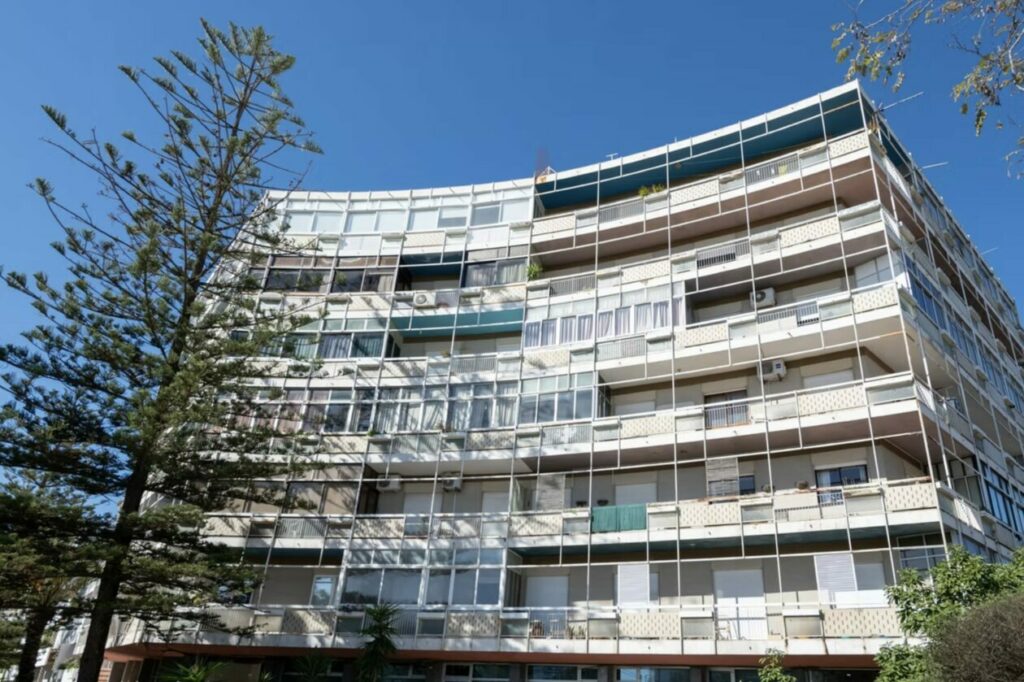
Picture from TheModernistWeekend.com
Why It Matters
The Modernist Weekend highlights an important chapter in Portugal’s architectural history. While Lisbon and Porto often attract more attention, Faro’s collection of modernist and brutalist buildings offers a refreshing and southern perspective on the country’s postwar design culture.
From elegant façades and open terraces to carefully designed interiors, these works reveal how Portuguese architects of the 20th century combined Mediterranean climate, modern ideals, and local craftsmanship.
For visitors, the event is a rare opportunity to experience these spaces up close — and to understand the cultural stories behind them.
Practical Information
📍 Location: Various sites around Faro, Algarve, Portugal
🗓️ Dates: November 7–9, 2025
💬 Languages: Most tours are in English; some also in Portuguese
Tickets
Tickets are available now!
Visit The Modernist Faro website or contact the organizers directly for details about tours, exhibitions, and events.
Don’t miss the opportunity to explore Faro through the lens of Modernism — a movement that continues to inspire creativity and innovation today.
A Hidden Modern Architectural Gem
Tucked away on the peaceful banks of the Cávado River, Quinta da Barca is a hidden modern architectural gem by João Álvaro Rocha, one of the leading and active voices of the Porto School movement. The resort blends seamlessly into the surrounding landscape — where water, light, and architecture meet in perfect balance.
Located in Esposende, just a five-minute drive or short boat trip from the Atlantic Ocean, Quinta da Barca offers direct river access through its private marina, as well as a 9-hole golf course surrounded by greenery.
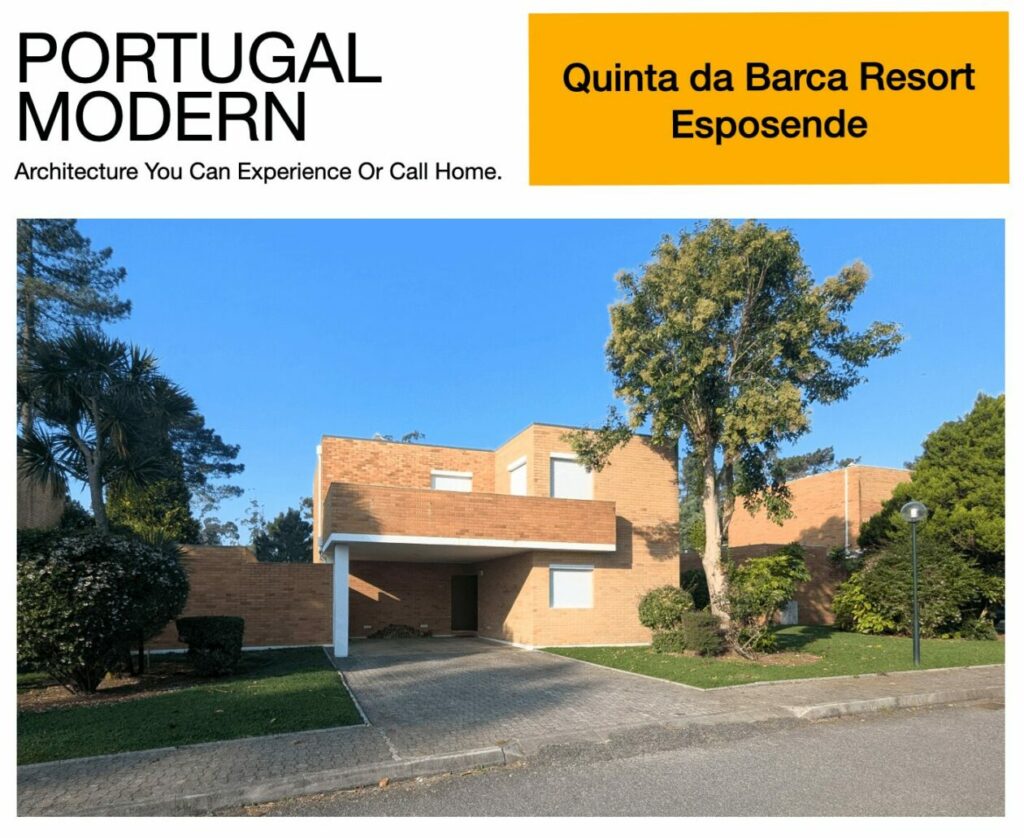
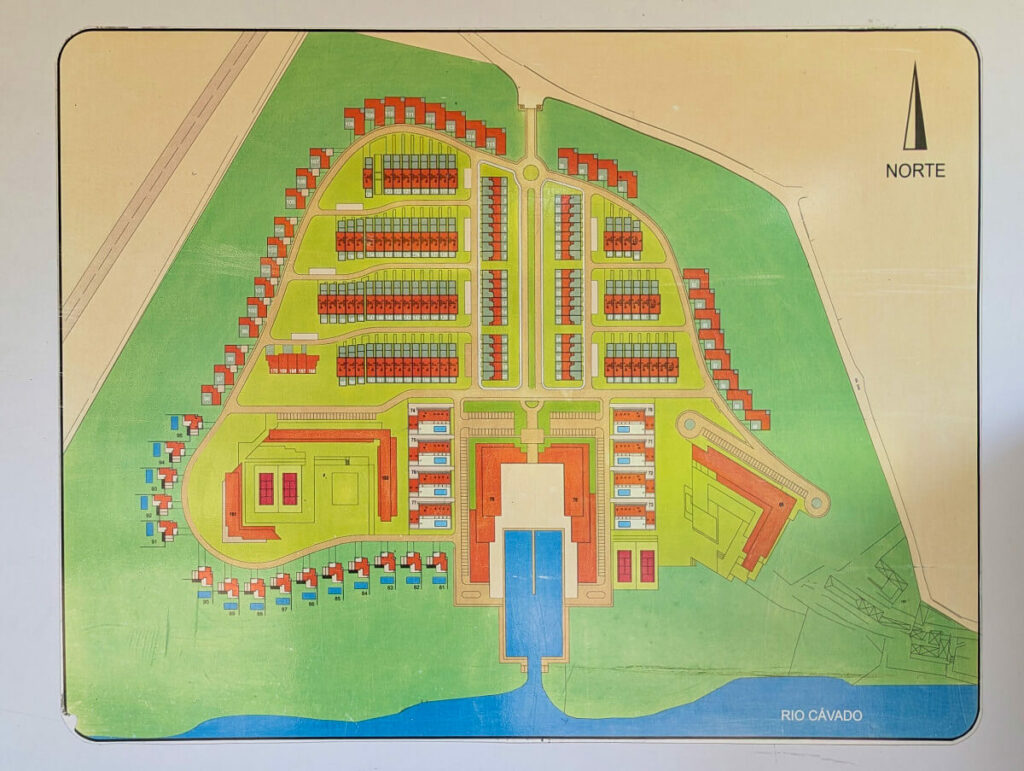
Designed and built between 1995 and 2001, the project was originally planned as a resort with two hotel buildings. During construction, the concept evolved — the hotels were redesigned as apartment blocks, creating a mix of villas and residences that reflect Rocha’s vision of community and individuality.
João Álvaro Rocha, well known for his social housing projects in northern Portugal, brings the Porto School’s principles to life here: clarity, restraint, and respect for place. The houses are organized as a series of enclosed courtyards — private yet rhythmically connected. The yellow and orange brick walls protect against the northern winds, while the interiors open to light-filled patios, creating a peaceful contrast between shelter and openness.
Unlike many other resorts, such as Bom Sucesso, Quinta da Barca follows a more flexible ownership model — owners are free to rent out their properties independently from the condominium management.
View of Quinta da Barca
Quiet, modern, and deeply rooted in its setting, Quinta da Barca remains a beautiful example of how architecture, landscape, and everyday life can come together on Portugal’s northern coast.
Map of Quinta da Barca
Quinta da Barca Villa 1
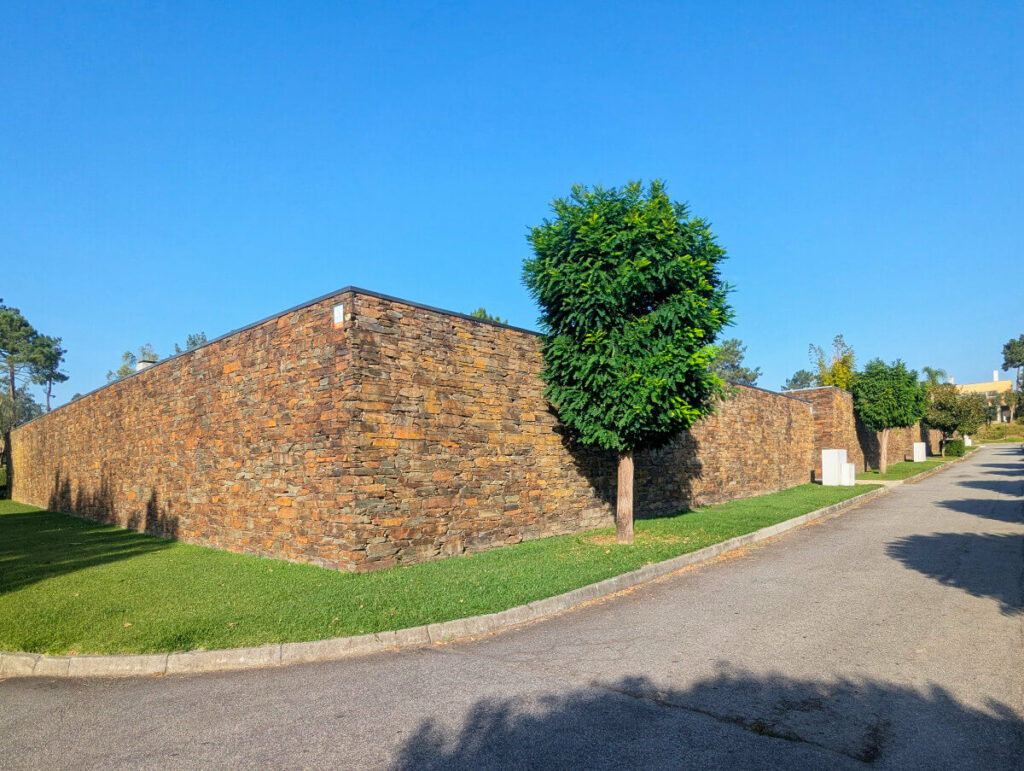
Quinta da Barca Villa 2
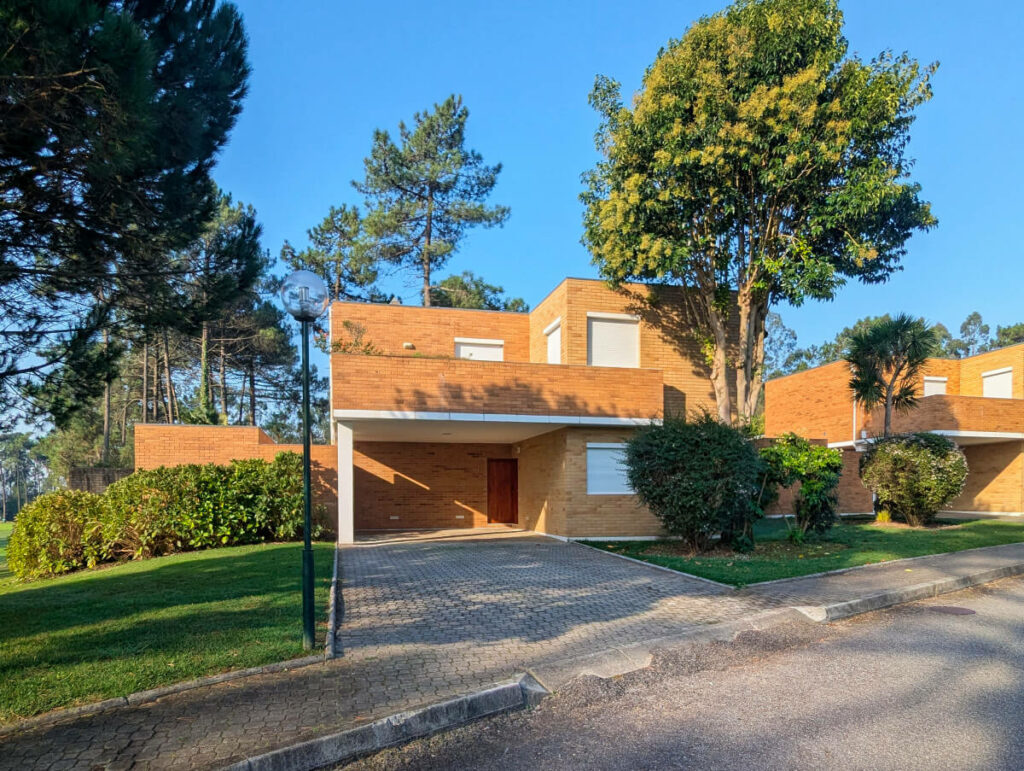
Quinta da Barca Villa 3
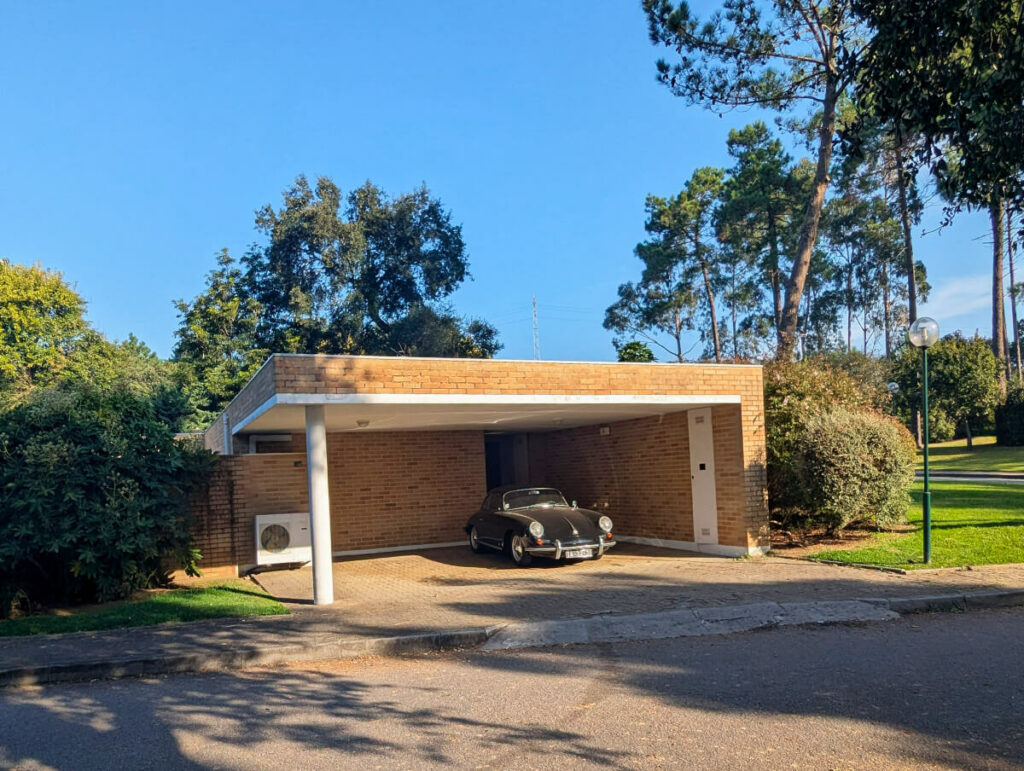
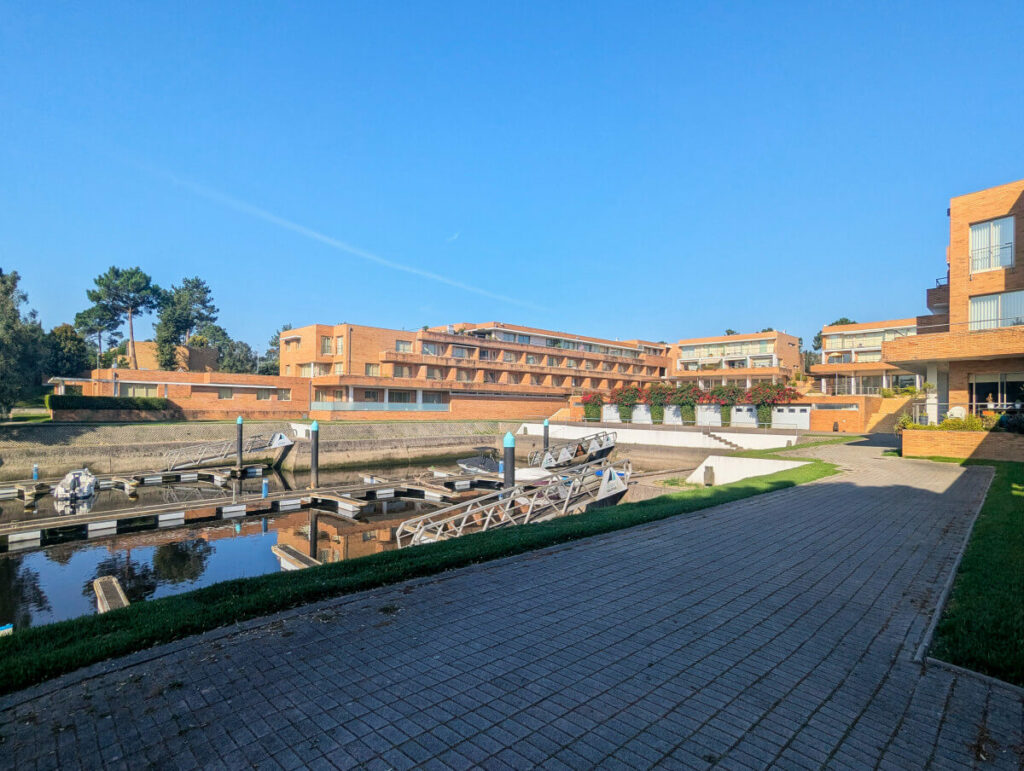
Quinta da Barca Villa, Marina Building
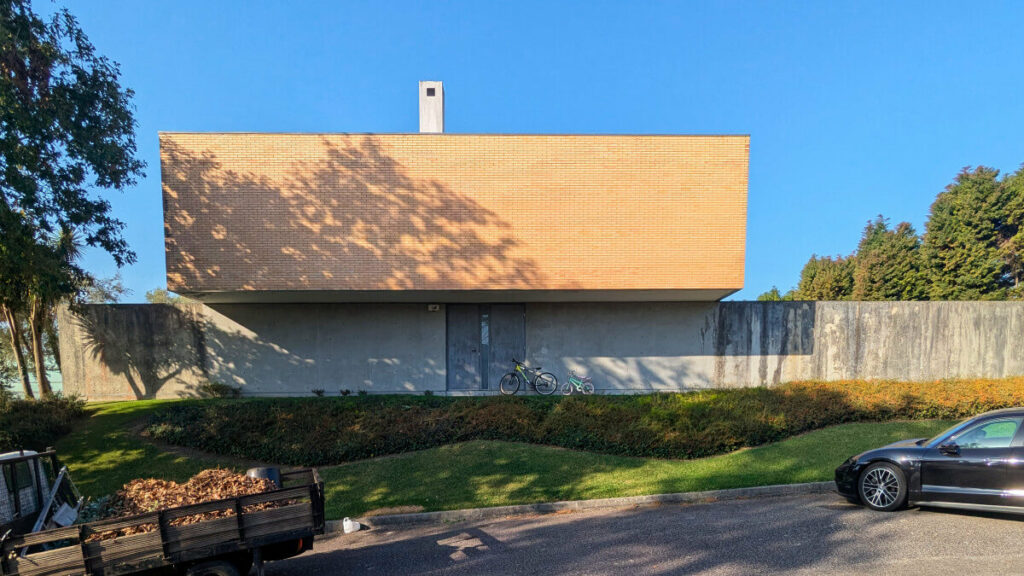
Quinta da Barca Row House 1 “Casa do Pinhal”
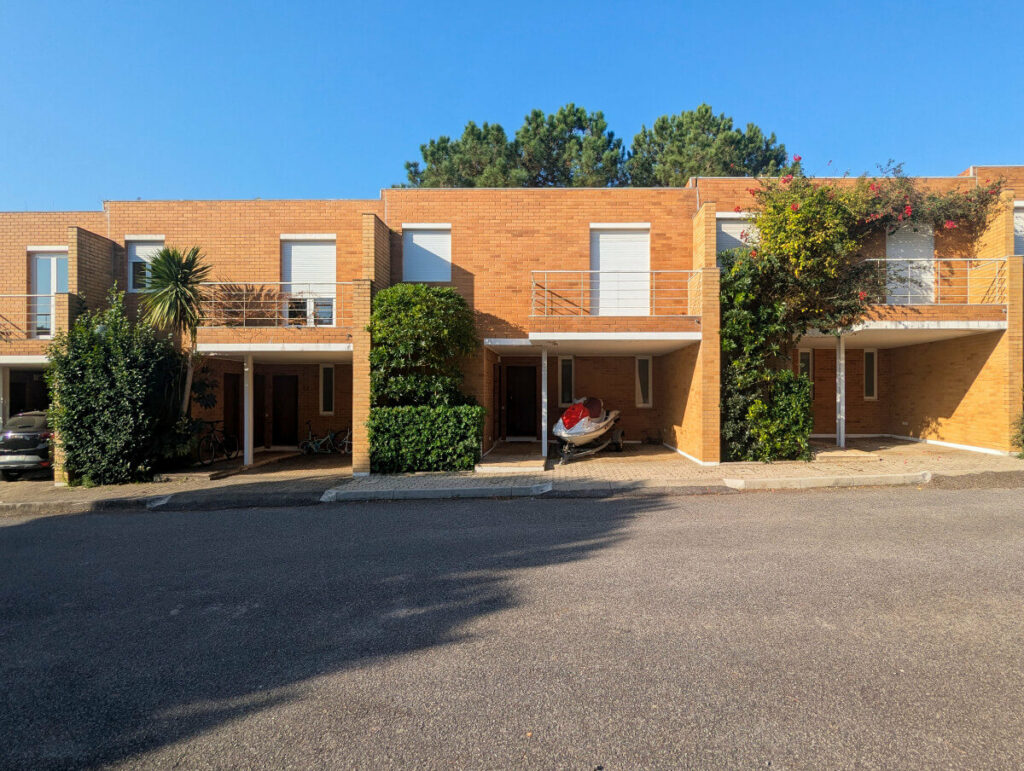
Quinta da Barca Row House 2
Quinta da Braca Row House 3
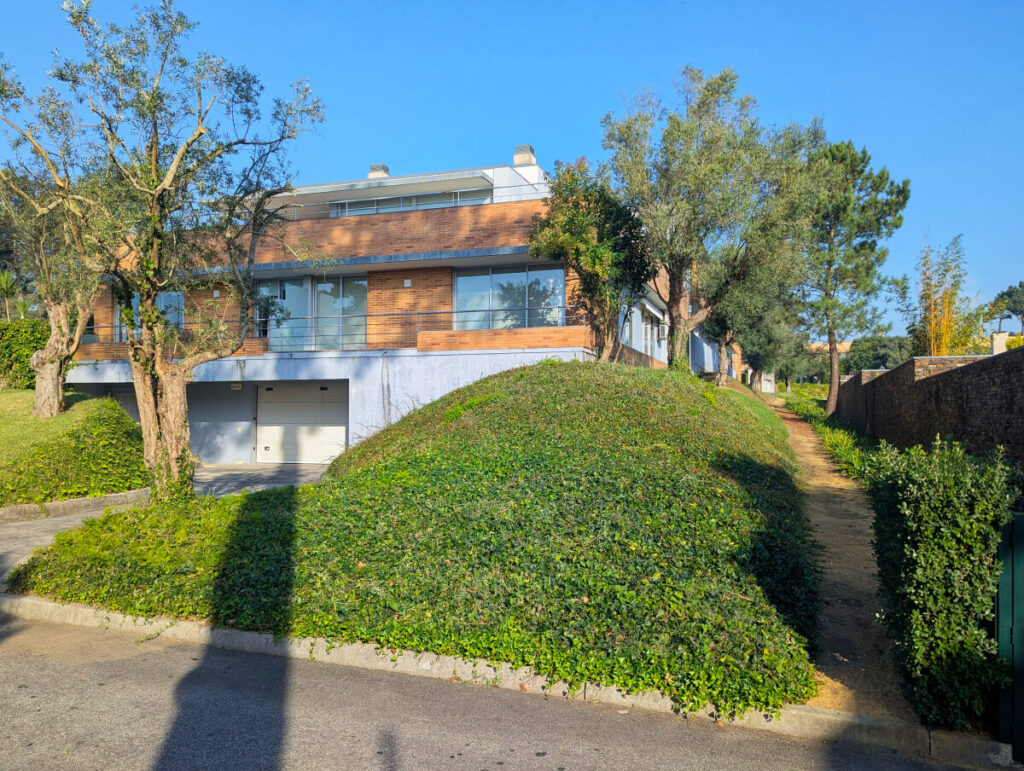
Apartments (Former Hotel)
Each villa and apartment at Quinta da Barca tells a small part of João Álvaro Rocha’s architectural story — quiet, balanced, and deeply human. Seen together, they form a landscape of calm geometry along the river, where every wall, courtyard, and opening has purpose. Walking through the resort or viewing it from the water, you can feel how architecture and nature merge into one continuous rhythm — a true hidden gem of modern Portuguese design.
Quinta da Barca Resort by João Álvaro Rocha see his website here.
We recently had the privilege of listening to a fascinating interview with the renowned Portuguese architect Alvaro Siza, offering profound insights into his illustrious career, distinctive design philosophy, and iconic projects. Siza, a true master of his craft, shared his perspectives on the architecture of Alvaro Siza as an art form, the intricate relationship between built spaces and nature, and the enduring relevance of his work.
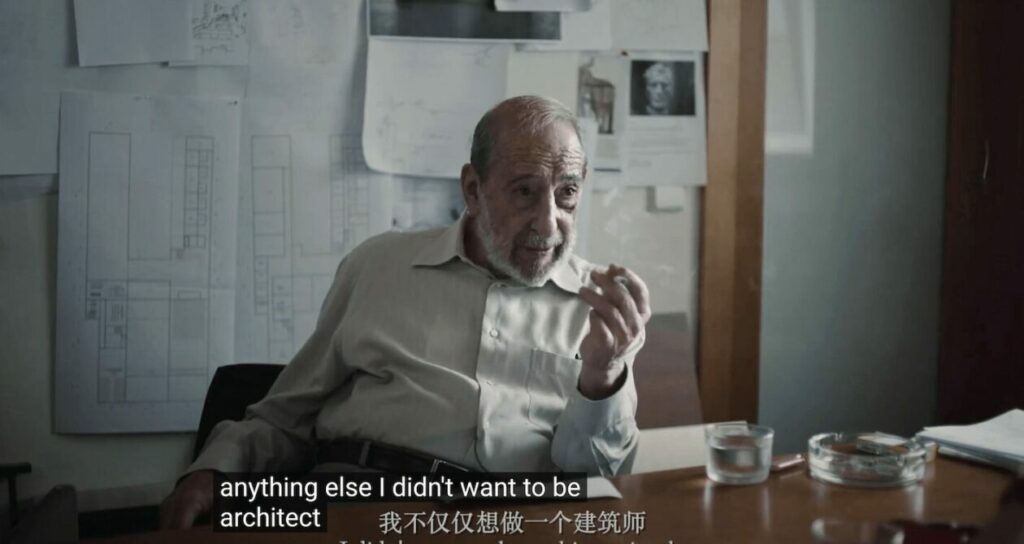
From Sculptor to Architect: A Journey of Passion
Siza’s journey into architecture wasn’t a straightforward one. He initially harbored aspirations of becoming a sculptor, exploring diverse interests in his youth, from firefighting to opera singing [01:27]. It was during his time at the School of Arts in Porto, where he immersed himself in painting, sculpture, and architecture, that his profound interest in the latter truly blossomed [01:52]. For Siza, architecture is unequivocally an art form, a belief he passionately defends, stating that viewing it otherwise is merely “an excuse to accept things that have not quality” [00:27].
Throughout his career, Alvaro Siza has exemplified the principles behind the architecture of Alvaro Siza, pushing boundaries and challenging conventions, which continues to inspire both students and fellow architects.
Bornova House: Harmonizing Architecture with Nature
One of the projects Siza discussed was the Bornova House, nestled in a breathtaking landscape. He emphasized the crucial relationship between architecture and nature [02:31], recounting the challenging yet rewarding experience of winning the competition for the project despite its rocky terrain, a feat achieved alongside architect Tavora [03:07]. This project exemplifies his commitment to integrating structures seamlessly into their natural surroundings.
Modernism and the Art of Timelessness
Carlos Gatin, a fellow Portuguese architect who collaborates with Siza, describes Siza not as an architect with a rigid style, but rather one who works within the continuity of modernism [04:08]. Gatin highlights Siza’s focus on the inherent reality of a project and the coherence between volume and space, particularly his masterful use of light [04:40]. This approach contributes to the enduring quality of his designs.
The Window: A Microcosm of Architectural Thought
Siza eloquently articulated the profound significance of the window in architecture, declaring that “all the problems of architecture are concentrated in the item of window” [05:05]. He elaborated on how the meticulous placement and detailing of a window necessitate a deep understanding of both interior and exterior spaces [05:15], underscoring the intricate thought process behind seemingly simple design elements.
Evolving Church Design and International Horizons
The interview also touched upon Siza’s design of a church in a small town north of Porto. He shared how the challenging topography led to a unique two-floor design [06:13] and how significant shifts in liturgy over centuries have rendered older church models obsolete, influencing his decision to incorporate a large opening to the valley in his design [07:06].
Siza’s influence extends far beyond Portugal’s borders. He expressed his enjoyment in working internationally, citing projects in diverse locations such as Manhattan, China, Mexico, and Italy [07:59]. His experiences in China, which he first visited a decade ago for the B House Museum [08:34], revealed a “wish for quality” in the country’s architectural endeavors [09:10].
An Enduring Legacy
Gatin aptly summarized Siza’s enduring appeal, praising his open-mindedness, which keeps him “a young person in a sense” despite his age [10:11]. He further noted that Siza’s projects, even those dating back 65 years, remain remarkably relevant and “not old-fashioned,” truly embodying the concept of “timelessness” [10:25].
Alvaro Siza’s interview offers a compelling glimpse into the mind of a visionary architect whose work transcends fleeting trends, leaving an indelible mark on the landscape of modern architecture.
We’re excited to share a true gem for fans of Portuguese architecture: the RTP series Magazine de Arquitectura e Decoração, originally recorded in 1992 and re-aired between 2016 and 2017, is now available for free streaming on RTP Play.
Presented by the late architect Manuel Graça Dias, the series explores the life, ideas, and projects of some of the most notable names in contemporary Portuguese architecture — including many of the architects who contributed to the vision of Bom Sucesso Resort.
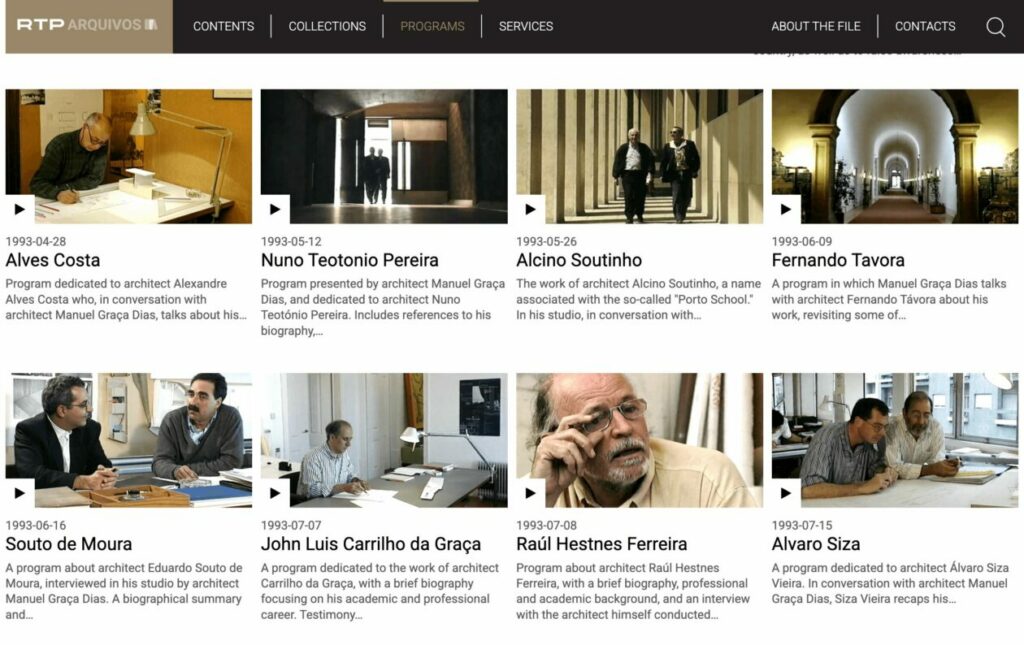
Architects Featured in the Series Who Shaped Bom Sucess
Several episodes focus on architects who designed some of the most iconic houses at Bom Sucesso:
- Álvaro Siza Vieira – [Episode 21]
- Eduardo Souto de Moura – [Episode 18]
- João Luís Carrilho da Graça – [Episode 19]
- Gonçalo Byrne – [Episode 6]
- Alcino Soutinho – [Episode 15]
These architects played a central role in the original master plan and villa designs for Bom Sucesso — many of which are now occupied, some still unbuilt, and others slowly returning to life thanks to renewed interest in the resort’s bold architectural legacy.
A Historic Archive Worth Watching
Each episode is about 25 minutes long, offering rare footage, insightful interviews, and in many cases, early documentation of buildings that are now part of Portugal’s architectural heritage.
This series was originally produced by Zebra Produções, directed by Edgar Feldman and Rui Simões, with authorship by Isabel Colaço, José Perdigão, and Manuel Graça Dias. It’s not only a valuable record of late 20th-century architectural thinking in Portugal, but also a reminder of the intellectual and artistic energy that shaped Bom Sucesso.
Watch the full series (in Portuguese) on RTP Play here: Magazine de Arquitectura e Decoração – RTP
Last Friday, April 25th, Portugal celebrated 51 years since the Carnation Revolution – a turning point that not only changed its political system, but also transformed the way the country builds, imagines, and lives in its spaces.
Over the last five decades, Portuguese architecture has become a global reference, blending social responsibility, design innovation, and artistic excellence.
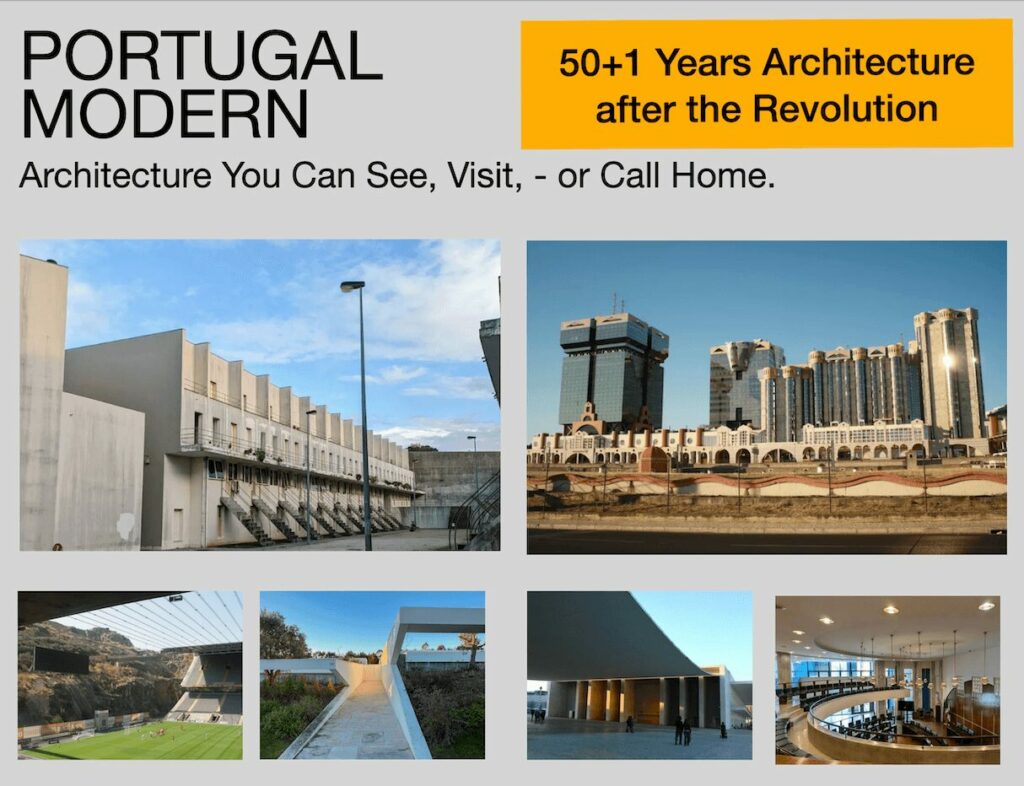
At the moment, Casa da Arquitectura in Matosinhos (Porto) is presenting a fantastic exhibition called “O que faz falta – 50 anos de arquitetura portuguesa em democracia”.
It’s structured as a journey through five major periods of modern architecture — and I’d like to share it with you.
The timeline of 50 Years of Modern Architecture in Portugal:
• REVOLUTION (1974–1983)
• EUROPA (1984–1993)
•END OF THE CENTURY (1994–2003)
• TROIKA (2004–2013)
• WI-FI (2014–2023)
This was one of the best architecture exhibitions I have seen in Portugal, showing over 50 buildings, most represented with original 3D models.
1. REVOLUTION (1974–1983): Building a New Society – Social Housing
On April 25, 1974, Portugal woke up to a new world.
While the rest of Europe spent the ’50s and ’60s exploring democracy, Portugal stayed frozen in dictatorship — until, finally, what the poet Sophia de Mello Breyner Andresen called “the first full day with a clean slate” arrived.
Architecture didn’t completely start from zero, but it gained a new purpose: create democratic spaces for everyone.
One huge step was the creation of SAAL (Serviço Ambulatório de Apoio Local), launched just a few months after the Revolution.
Now world-famous architects like Álvaro Siza Vieira and Gonçalo Byrne worked directly with local communities to replace slums with real, dignified homes.
Architecture became political — an act of solidarity and a tool for building a better society.
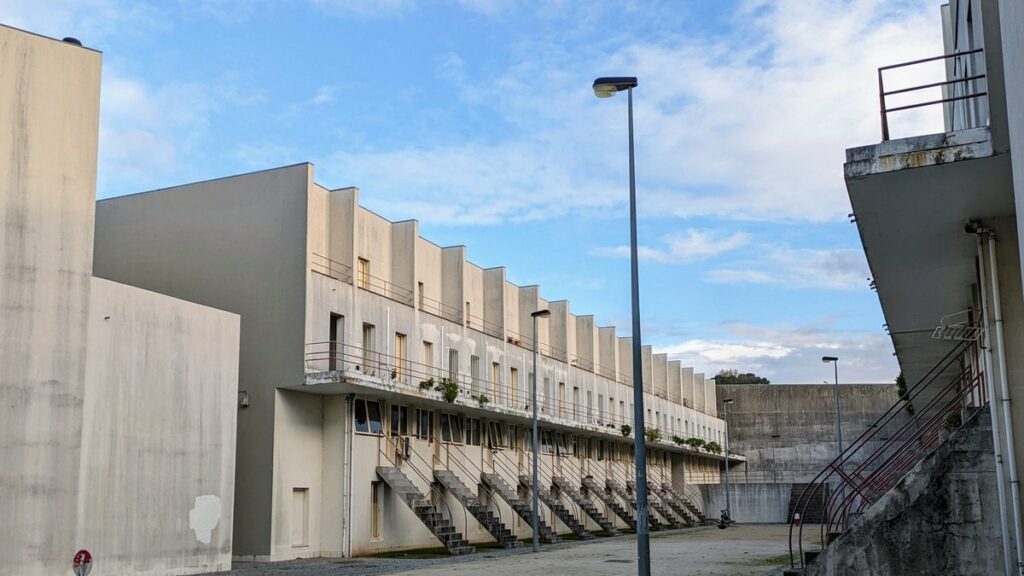
(Bairro da Bouça Porto, Álvaro Siza Photo by Ben)
2. EUROPA (1984–1993): Embracing European Integration – Infrastruct
By the mid-80s, Portugal had secured its democracy — and joining the European Economic Community in 1986 sent a clear message: Portugal was ready to reinvent itself.
Architecture led the way. Across the country, fresh ideas mixed regional traditions with artistic experimentation.
Thanks to European funds, there was massive investment in infrastructure: new universities, schools, cultural centers, and city halls.
At the same time, Portugal’s economy shifted from mainly agriculture to manufacturing and tourism.
One highlight is City Hall of Matosinhos, by Alcino Soutinho, started in 1976 — the first big public building after the Revolution, full of optimism and civic pride.
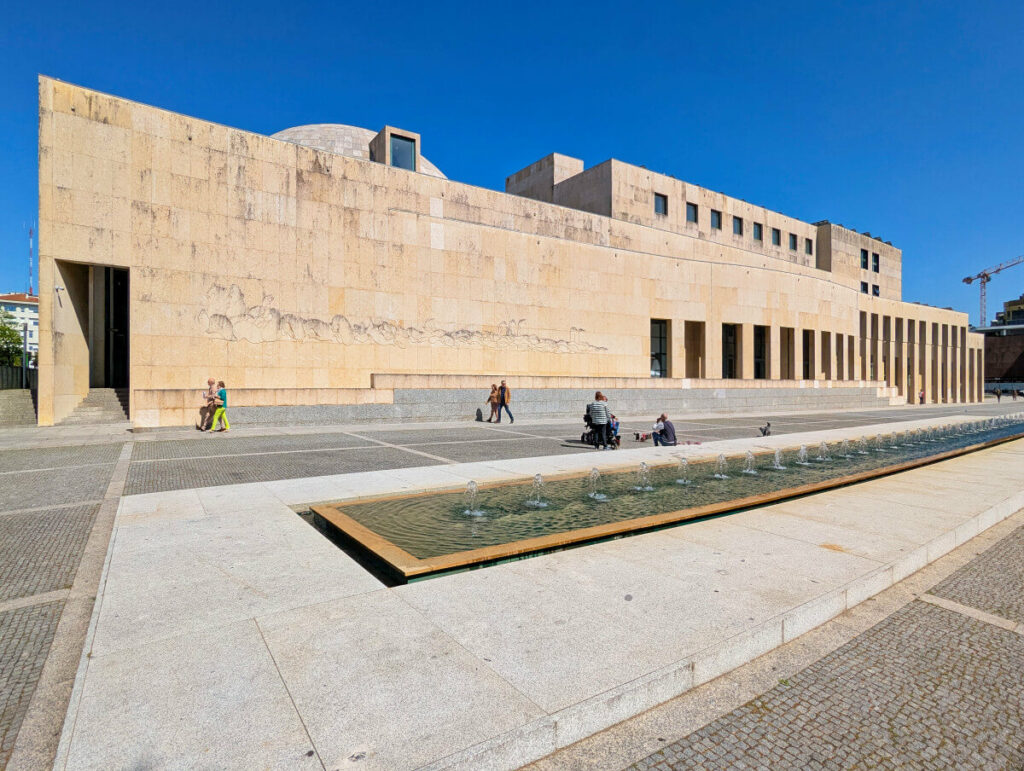
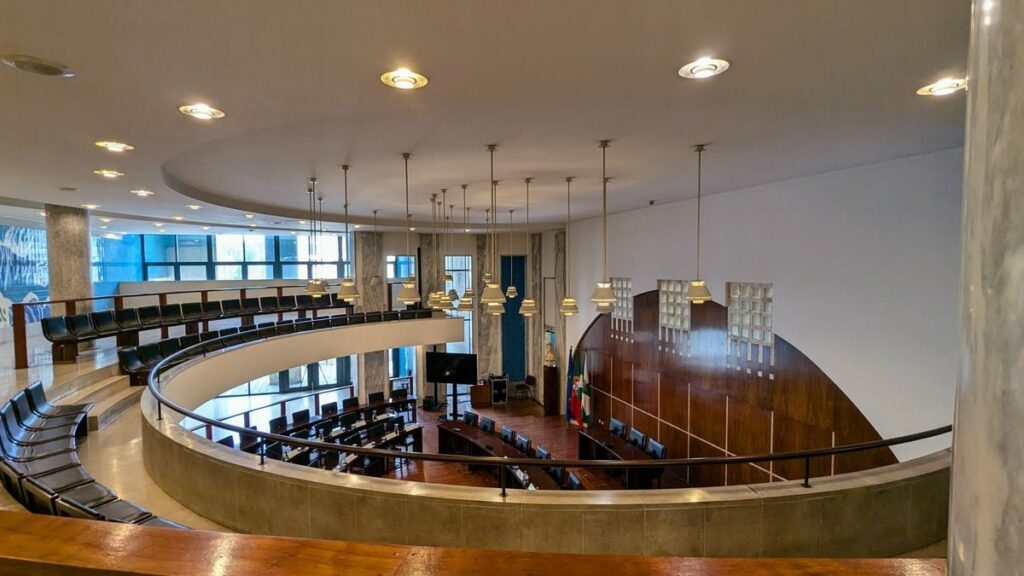
(City Hall of Matosinhos, Alcino Soutinho, Images by Ben)
Architecture also entered the media spotlight with Tomás Taveira’s Amoreiras Complex in Lisbon — colorful, controversial, and impossible to ignore.
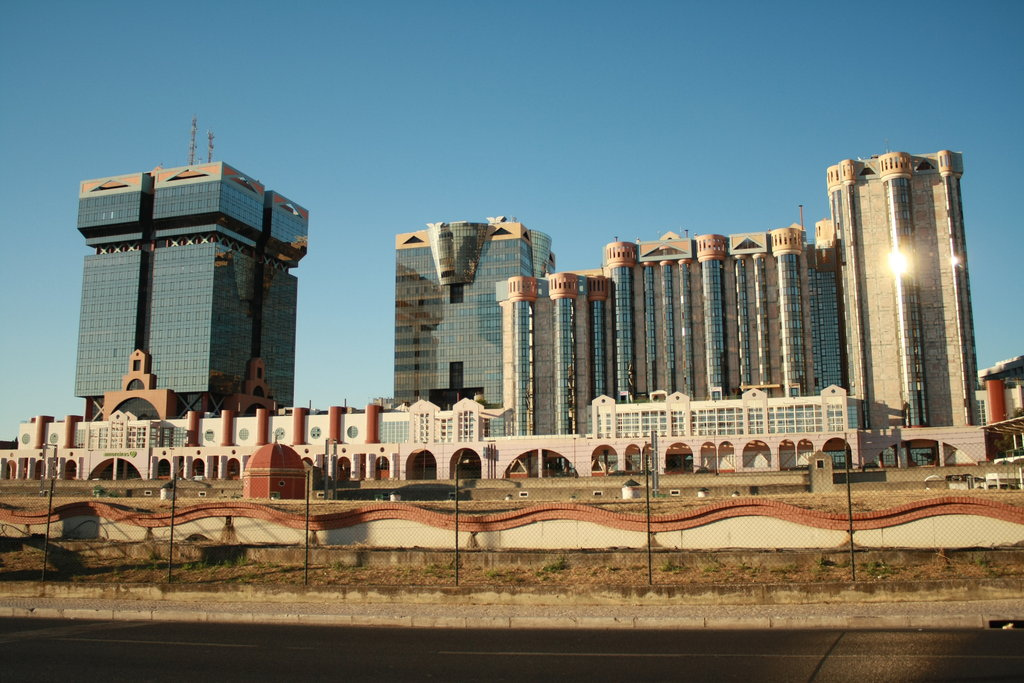
(Amoreiras Complex, Image by Triplecaña Wikipedia)
Meanwhile, universities expanded rapidly: new campuses opened in Lisbon, Aveiro, and Porto.
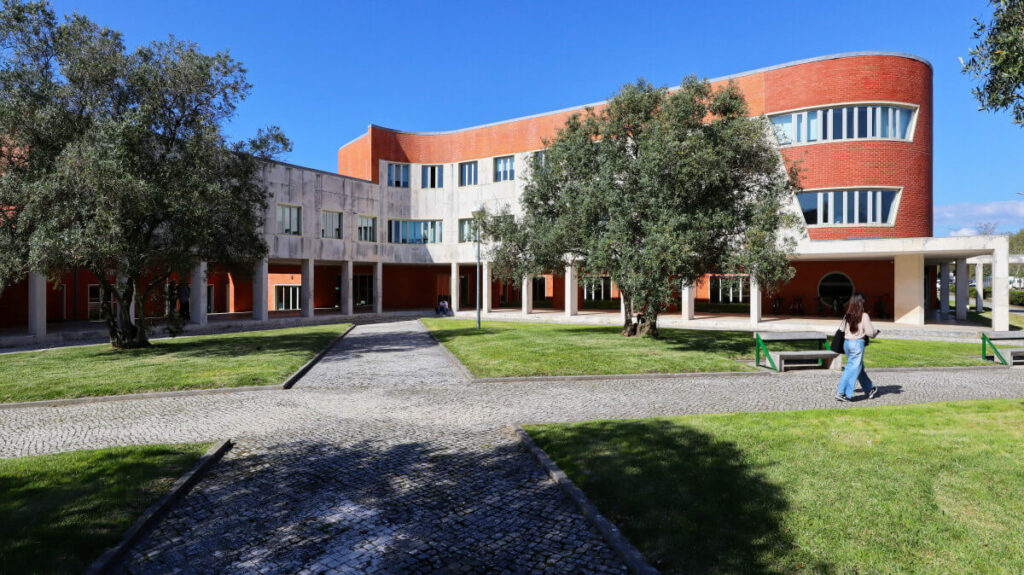
(Alcino Soutinho, Department of Ceramics and Glass Engineering, University of Aveiro 1988 – 1991, Image by Ben)
Public education, almost non-existent before the Revolution, became a national priority.
A proud moment came when Álvaro Siza Vieira received the Pritzker Architecture Prize in 1992 — the first Portuguese architect ever honored with the “Nobel Prize of Architecture.”
3. END OF THE CENTURY (1994–2003): Optimism and Reflection – Expo, Sport and Villas
The end of the 20th century was a time of excitement and ambition.
The euphoria of big events like Expo ’98 set the mood, and architecture became a key part of Portugal’s new global image.
At Expo ’98, Álvaro Siza’s stunning Pavilion of Portugal stole the show. Its flowing concrete canopy became an unexpected new icon for Lisbon and modern Portuguese architecture.
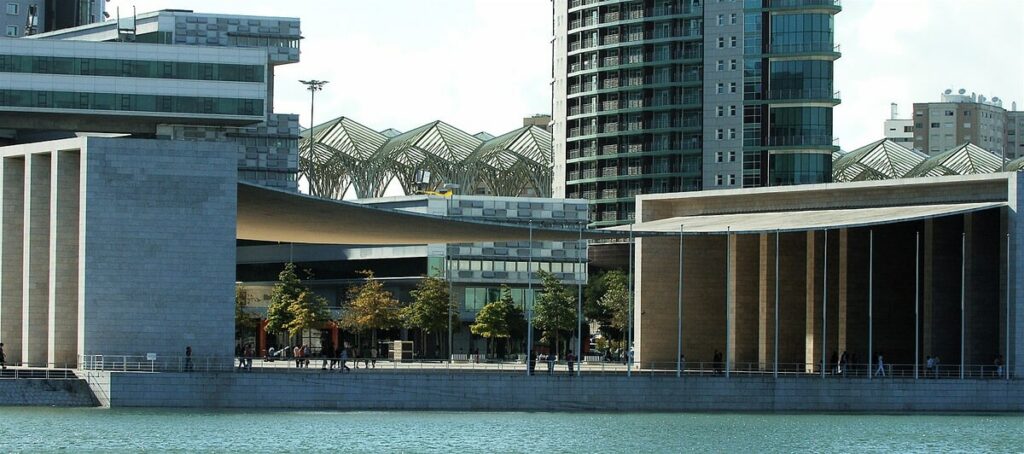
(Pavilion of Portugal Expo 98, Álvaro Siza Image by Ben)
Two icons bookend this period: the Centro Cultural de Belém (Lisbon) by Vittorio Gregotti, Manuel Salgado and Casa da Música in Porto by Rem Koolhaas.
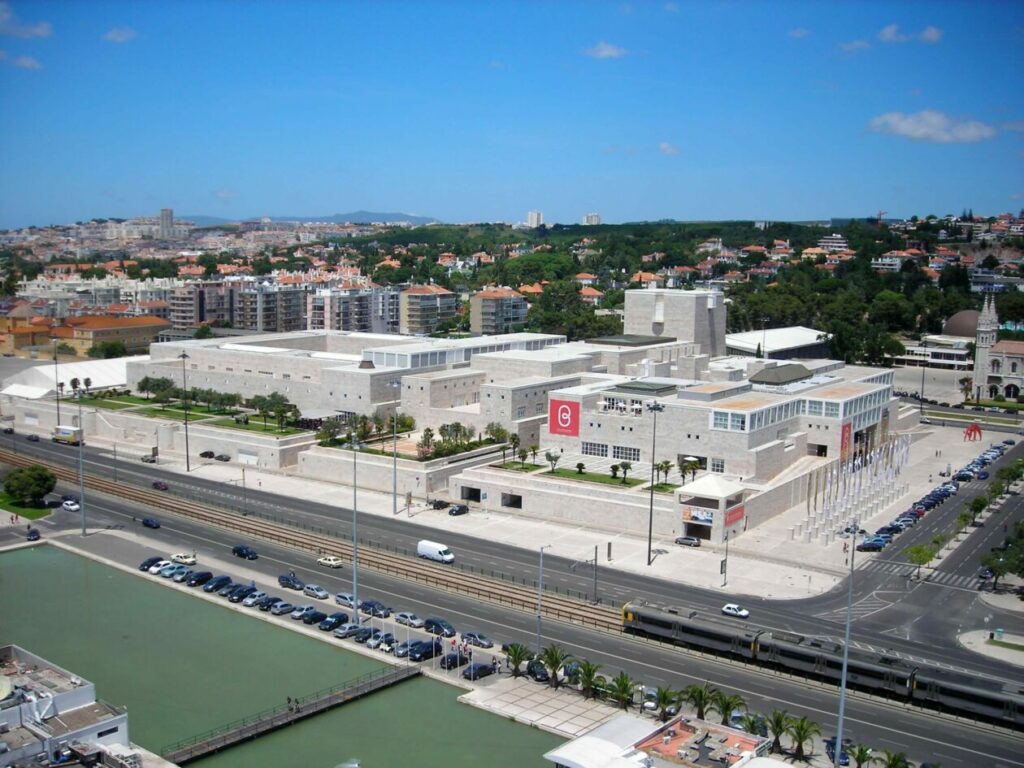
(Centro Cultural de Belém, Image from Therese C – Flickr: DSCN5750)
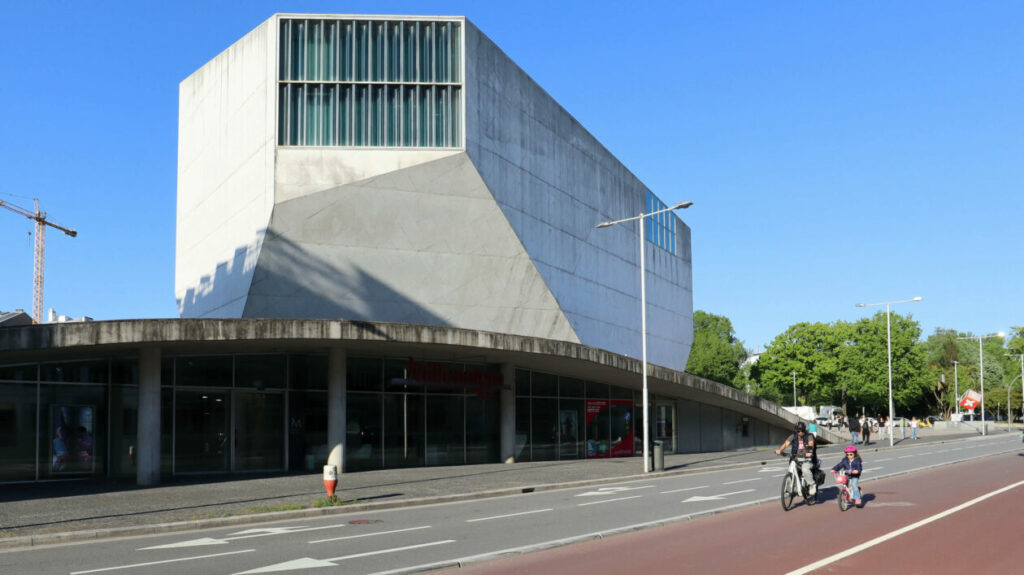
(Casa da Música, Image by Ben)
It was a time of huge construction, with Portugal racing to catch up after decades of isolation. Architects were pushed to new technical and formal limits, while the European Union kept the support flowing.
University education expanded across the country.
Projects like the Mitra Campus in Évora, the Library of the University of Beira Interior, and the Mechanical Engineering Department at the University of Aveiro showed the energy of decentralization.
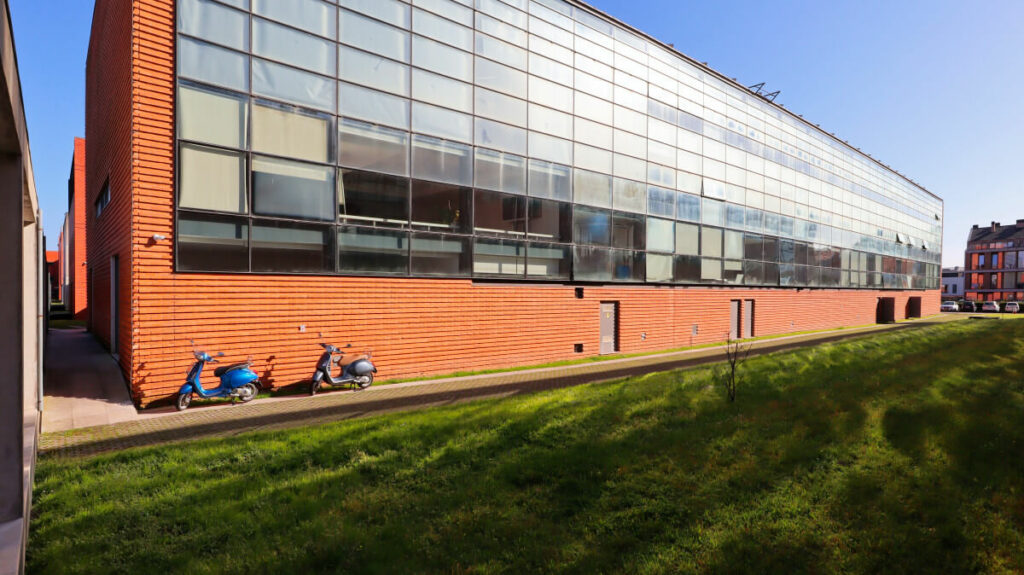
(Adalberto Dias, University of Aveiro Image by Ben)
Meanwhile, Portugal’s bid to host UEFA Euro 2004 led to a boom in sports infrastructure.
One of the highlights is the Stadium of Braga, designed by Eduardo Souto de Moura — a bold fusion of a stone quarry and a football stadium.
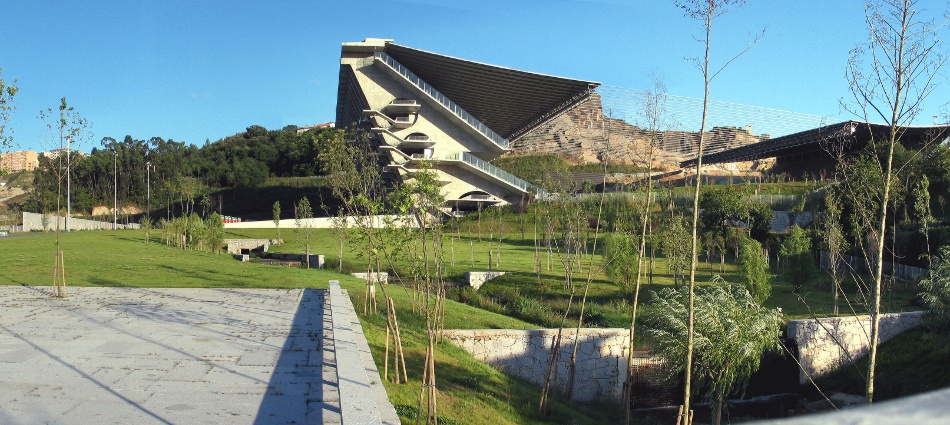
(Braga Stadium, Image by 準建築人手札網站 Forgemind ArchiMedia (Wikipedia))
Even the Bom Sucesso Resort, a visionary project near Óbidos with 23 Portuguese architects designing 600 houses, was born in this era of optimism.


4. TROIKA (2004–2013): Crisis and Creativity
The 2008 global financial crisis hit Portugal hard.
Under the strict supervision of the Troika (European Commission, ECB, and IMF), the country entered years of austerity.
This had a devastating effect on architecture: public investments stopped, many firms closed, and big projects disappeared.
But hard times also brought new creativity.
Architects focused on small-scale, sustainable, and adaptive reuse projects — often smarter, more sensitive, and community-focused.
Sadly, even big developments like Bom Sucesso Resort faced bankruptcy.
Still, there were bright moments: in 2011, Eduardo Souto de Moura received the Pritzker Prize, following in the footsteps of his mentor Siza Vieira — once again bringing international recognition to Portuguese architecture.
5. WI-FI (2014–2023): Digitalization and Sustainability
Today, Portuguese architecture is fully plugged into global trends: smart technologies, environmental responsibility, and cultural sensitivity are front and center.
After the crisis, European funding helped Portugal recover, leading to new infrastructure projects and cultural initiatives all over the country.
Architects embraced sustainability, regional development, and innovation — while also facing growing challenges like housing shortages and tourism pressure.
Some of the boldest recent works include the Arquipélago Contemporary Arts Centre in the Azores, the restored Bolhão Market in Porto, and the Campanhã Intermodal Terminal.
In the wine and olive oil sectors, new spaces like Adega Azores Wine Company and Adega 23 have blended architecture, sustainability, and tourism.
A new generation of architects is pushing the boundaries too, with smaller but powerful projects like Six Houses and a Garden by fala atelier and House Over the Hills by Diogo Aguiar Studio.
Final Thoughts
Looking at the past 50+1 years, it’s clear that architecture in Portugal has never just been about buildings.
It’s about democracy, community, creativity, and resilience — from the dreams of 1974 to today’s smart and sustainable designs.
If you ever have the chance to visit Casa da Arquitectura in Matosinhos, I highly recommend it. This exhibition goes till September 2025
It’s a journey through history, but also a window into the future.
I hope you enjoyed the time travel,
Ben
Portugal Modern is proud to announce that we’ve received a rare set of original photographs and 3D model images from architect João Pedro Falcão de Campos, documenting his project at Bom Sucesso Resort.
Falcão de Campos is known for his minimalist and highly functional approach to design. With over 30 years of architectural practice, his work balances modernist clarity with a deep sensitivity to context, light, and material. He has collaborated with giants of Portuguese architecture, including Álvaro Siza Vieira and Gonçalo Byrne, and continues to shape contemporary architectural discourse.
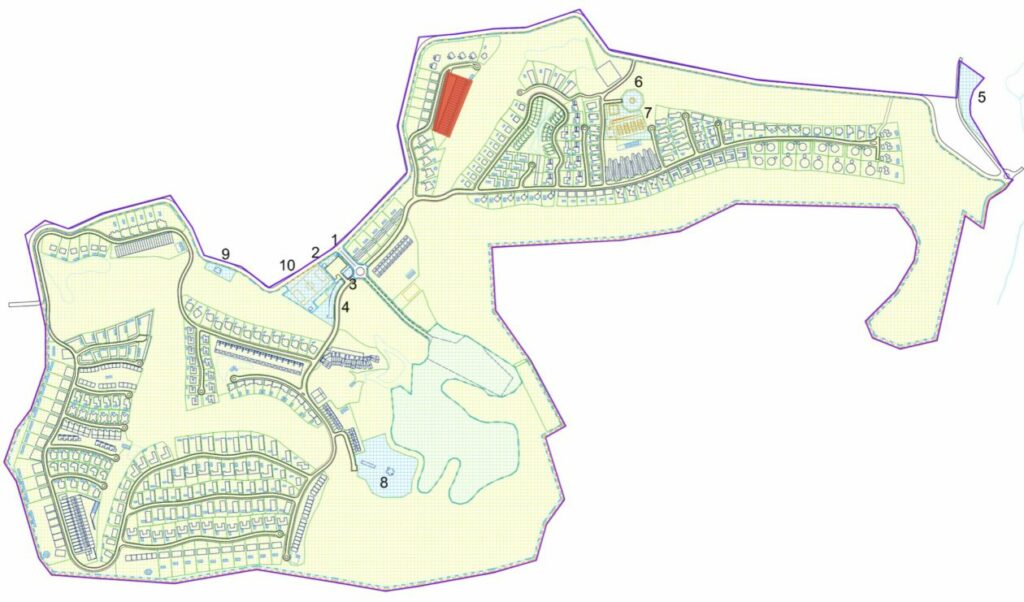
His contribution to Bom Sucesso—23 terraced T2 houses on Lot 287 along Caminho do Lago—stands as a masterclass in terrain integration and spatial economy. Built across three levels to follow the natural slope of the land, these homes are defined by a rhythmic play of courtyards, generous light, and precise sightlines over the golf course. As Falcão de Campos notes:
“The succession of courtyards that characterizes the project allows the houses to receive light from various directions, contradicting the band, generally exposed only on two elevations.”
We’re honored to share his documentation—now available exclusively on PortugalModern.com—offering a rare glimpse into the design process and spatial logic behind one of the resort’s most thoughtful ensembles.
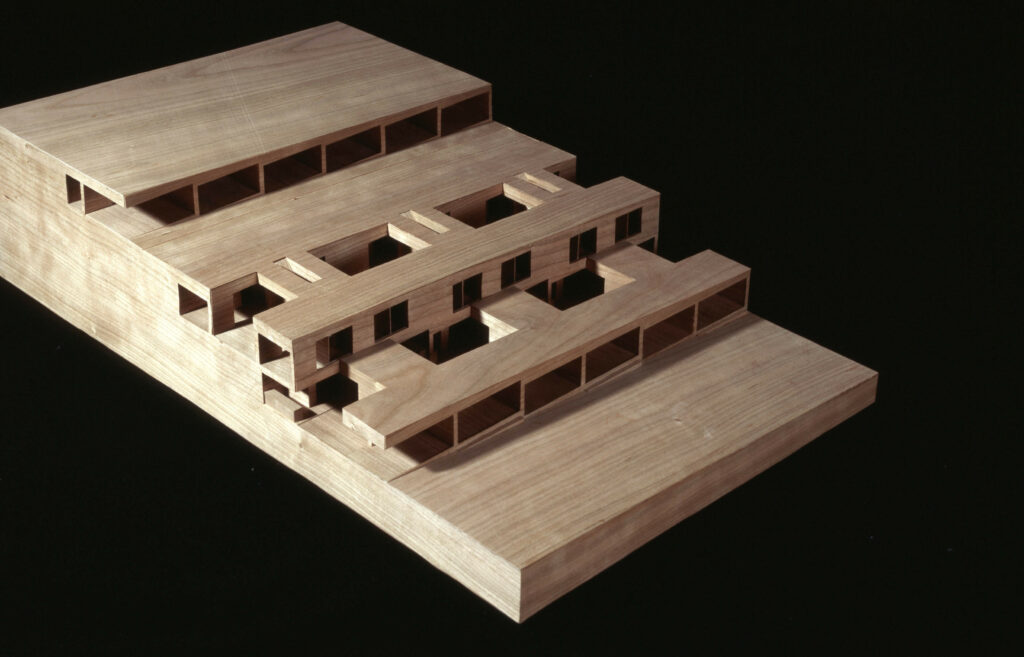
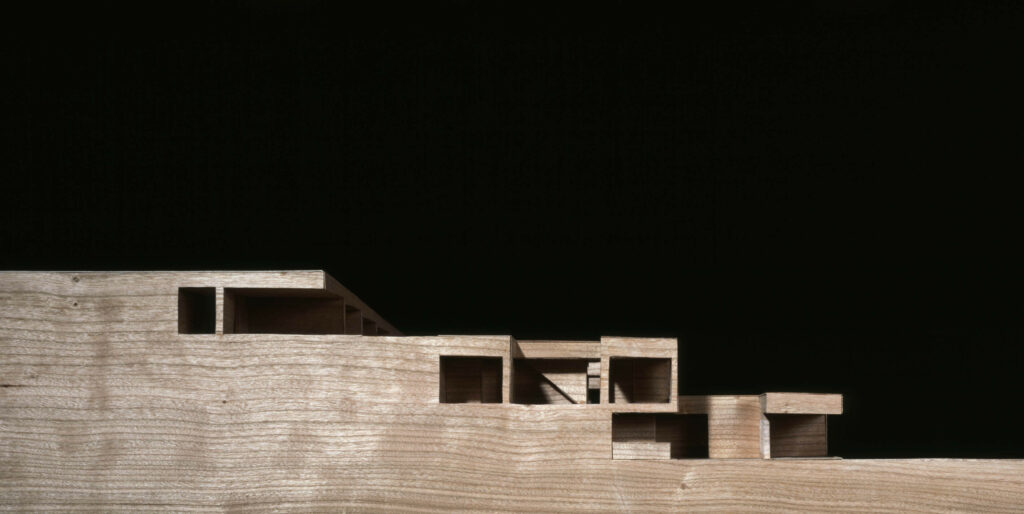
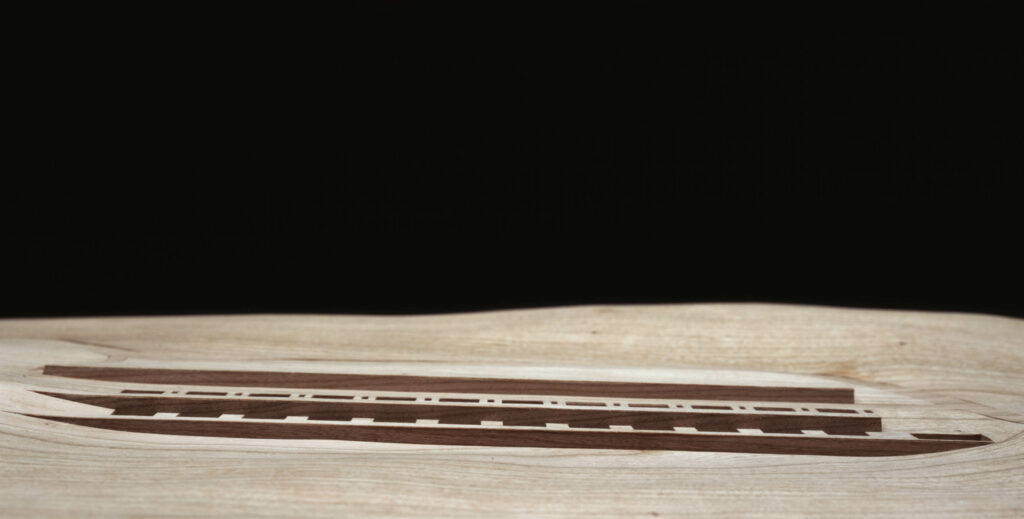
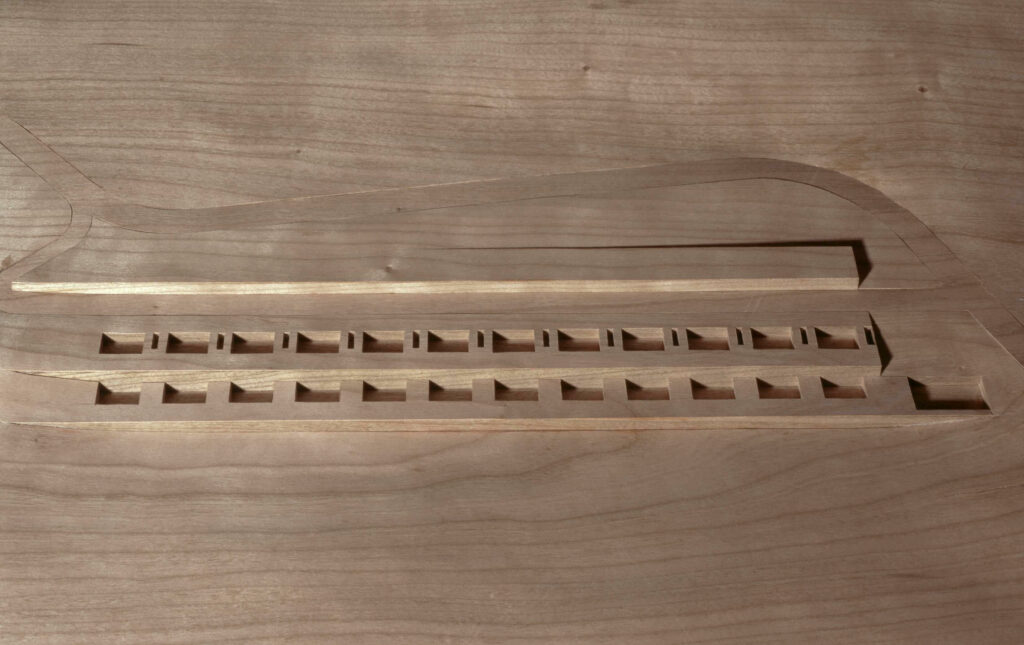
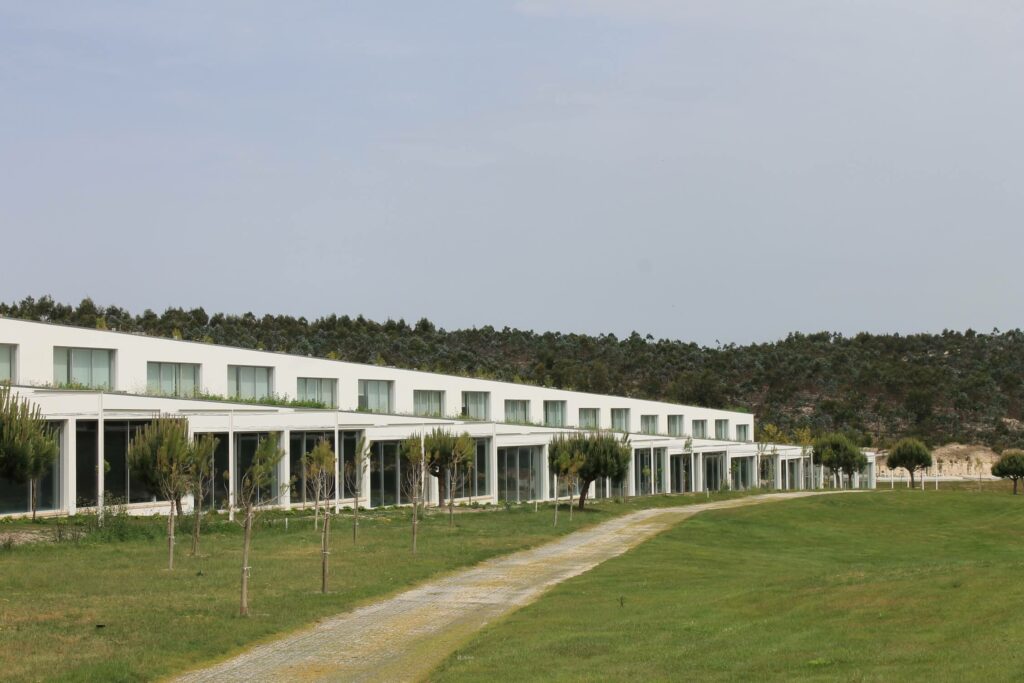
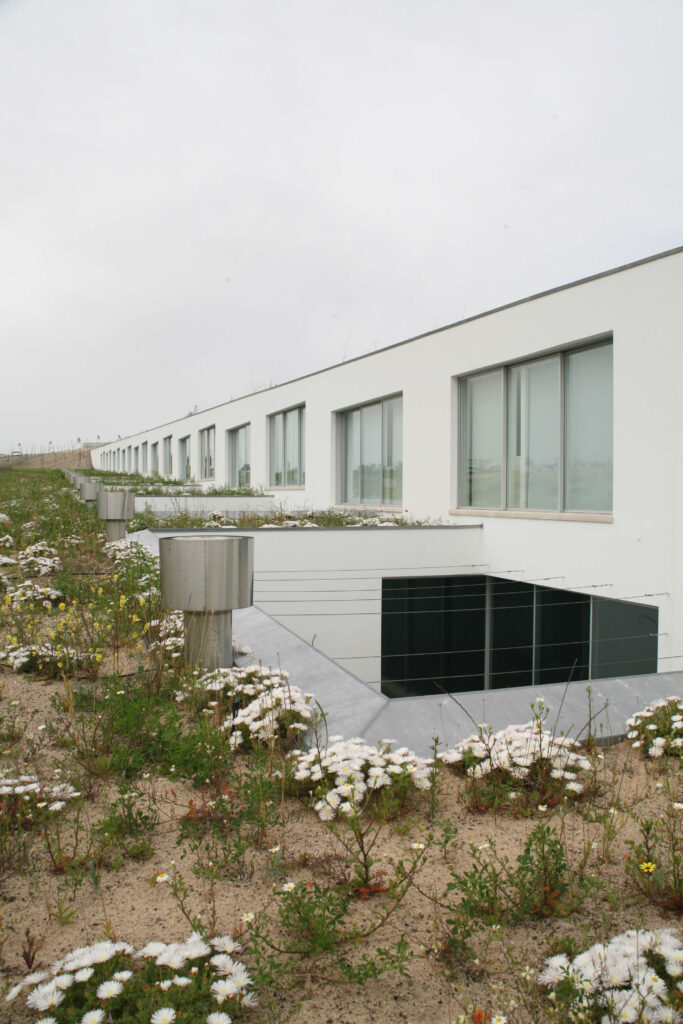
We thank Falcão de Campos and Team for kindly sharing these images with us.
Hello, I’m thrilled to share the exciting news of the successful launch of Portugal Modern Architecture last week. Your warm wishes have been incredibly motivating—thank you! The website has already attracted 400 visitors from around the globe, and I’m honored that esteemed architects like Álvaro Siza Vieira and Falcão de Campos are planning to contribute high-quality images to enrich our webpage.
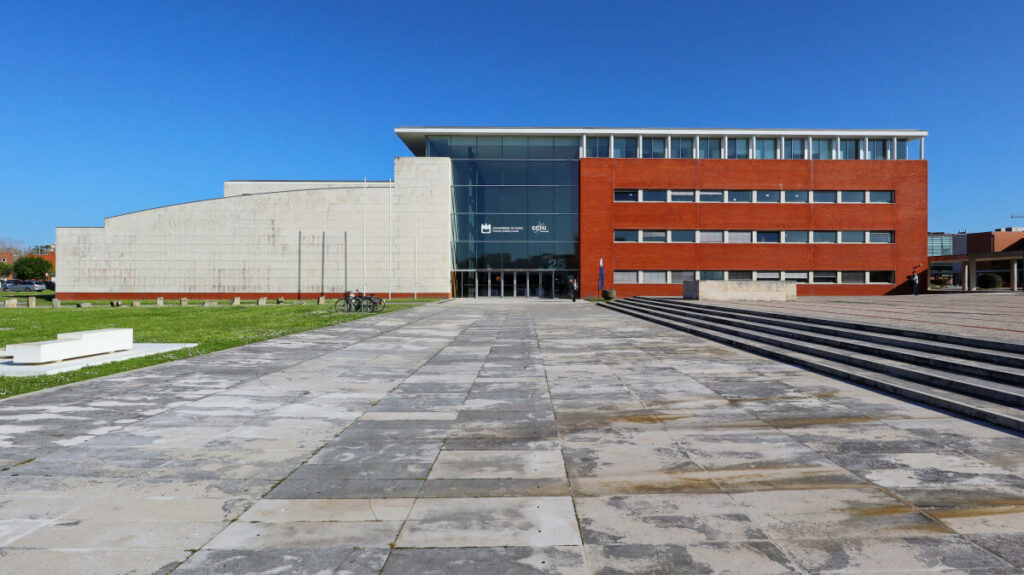
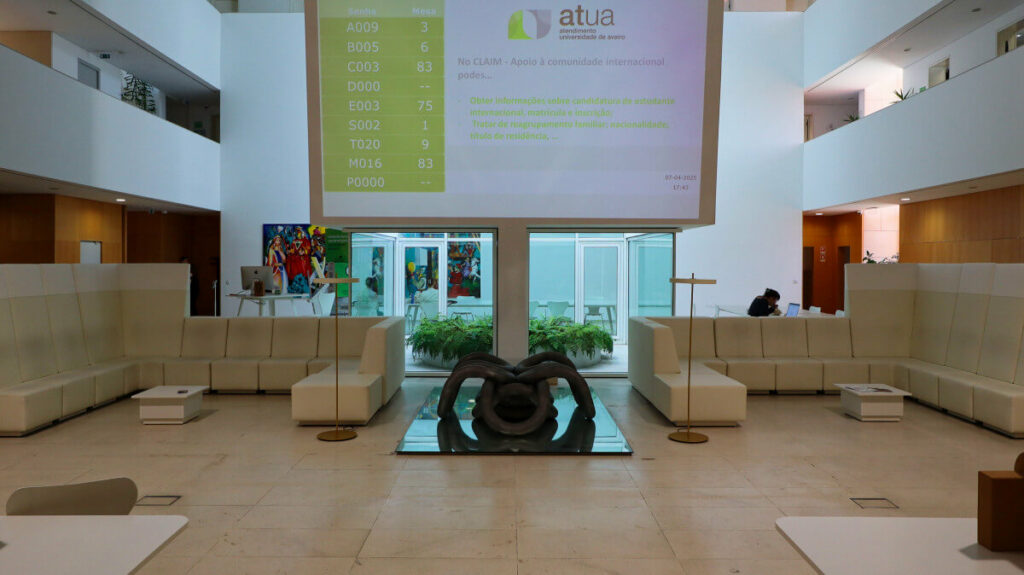
As we delve deeper into the modern architectural landscape, it’s essential to recognize how these structures reflect the cultural and historical narratives of their environments. The University of Aveiro is not just an educational institution; it’s a canvas showcasing the evolution of architectural thought in Portugal. This blog post will take you on a journey through its most iconic buildings, examining the stories, materials, and people behind them.
The site is strategically located near the Aveiro lagoon, enhancing the relationship between architecture and nature. This proximity influences the choice of materials and design elements, creating an immersive experience for students and visitors alike. Many consider this union of architecture and environment as a hallmark of contemporary design.
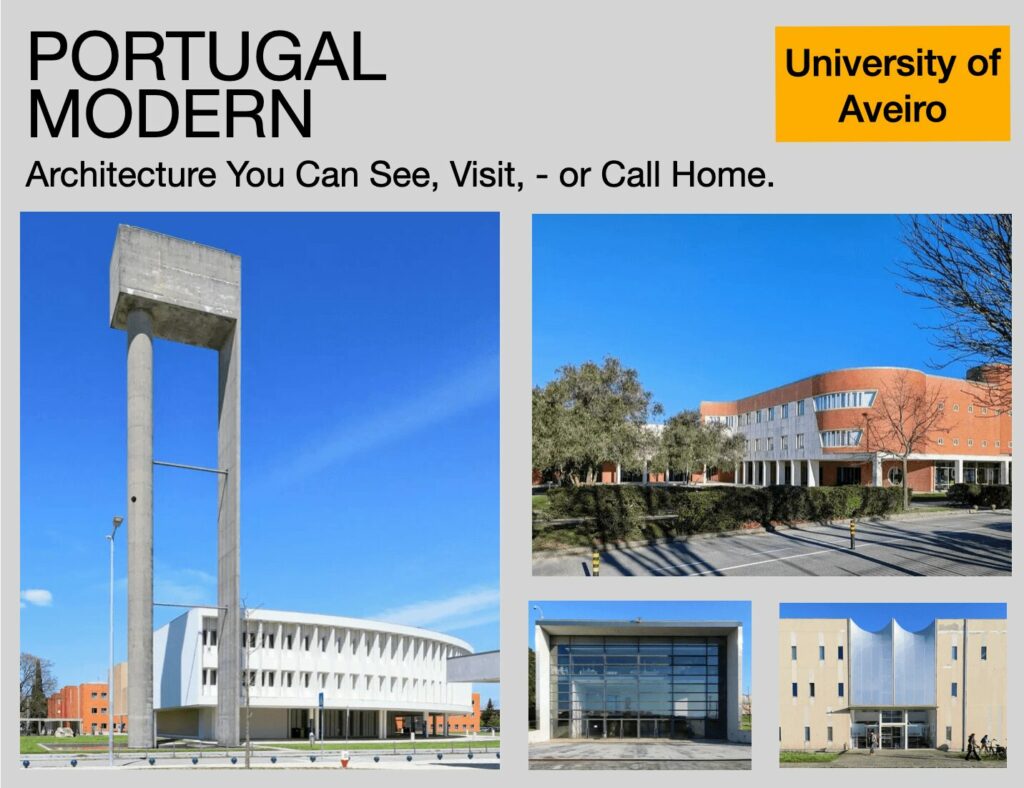
Today, I invite you to explore another remarkable architectural ensemble: the University of Aveiro. Much like Bom Sucesso, this campus showcases the collaborative brilliance of Portugal’s top architects and epitomizes Modern Architecture, resulting in a beautiful and functional space nestled near the water in northern Portugal.
The University of Aveiro campus is also home to various art installations and sculptures that complement its architectural beauty. These artworks, created by local and international artists, invite visitors to engage with the space in innovative ways, fostering a sense of community and creativity.
A Collaborative Architectural Masterpiece
The University of Aveiro’s campus is a testament to the synergy of renowned architects, including familiar names from Bom Sucesso:
Alcino Soutinho, Álvaro Siza Vieira, Gonçalo Byrne, Manuel Aires Mateus, and Carrilho da Graça
Furthermore, the University Library is not only a place for academic resources but also a hub for cultural activities. Events such as poetry readings, art exhibitions, and guest lectures take place here, reinforcing the library’s role as a pivotal part of campus life. These activities encourage interaction among students, faculty, and the wider community.
For Me, the Most Impressive Are:
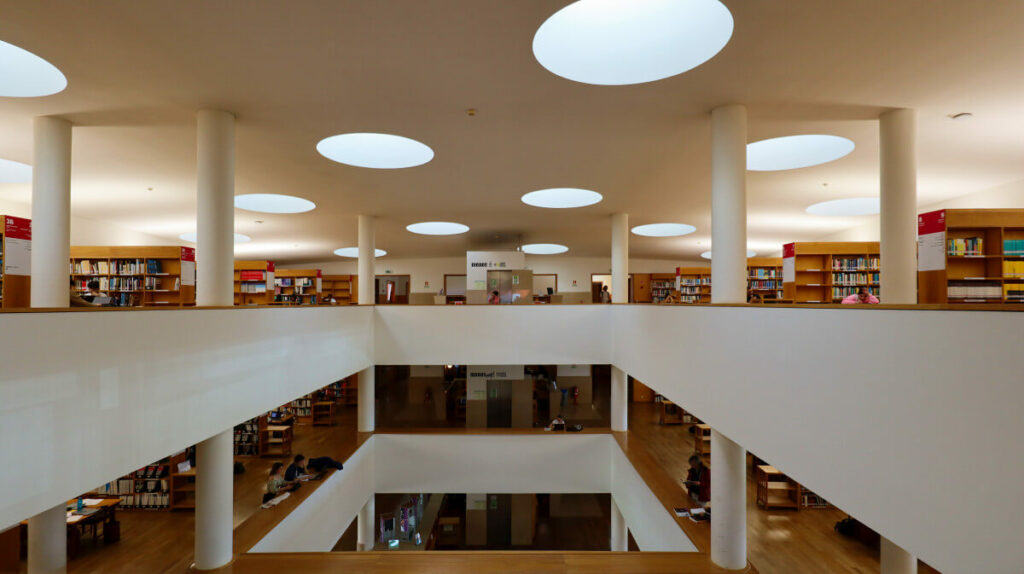
Álvaro Siza Vieira’s University Library
The University Library, crafted by Álvaro Siza Vieira, stands as a central feature of the campus. Siza drew inspiration from the geometry of the surrounding salt pans, influencing the building’s layout, horizontal openings, and the interplay of light within the interior. A distinctive curved wall on the western façade filters reflected light, while a continuous horizontal cut at the third level offers seated visitors a visual connection to the expansive salt marshes beyond.
The building also draws inspiration from Alvar Aalto—particularly in the use of skylights and artificial lighting designed to mimic natural light in the evenings.
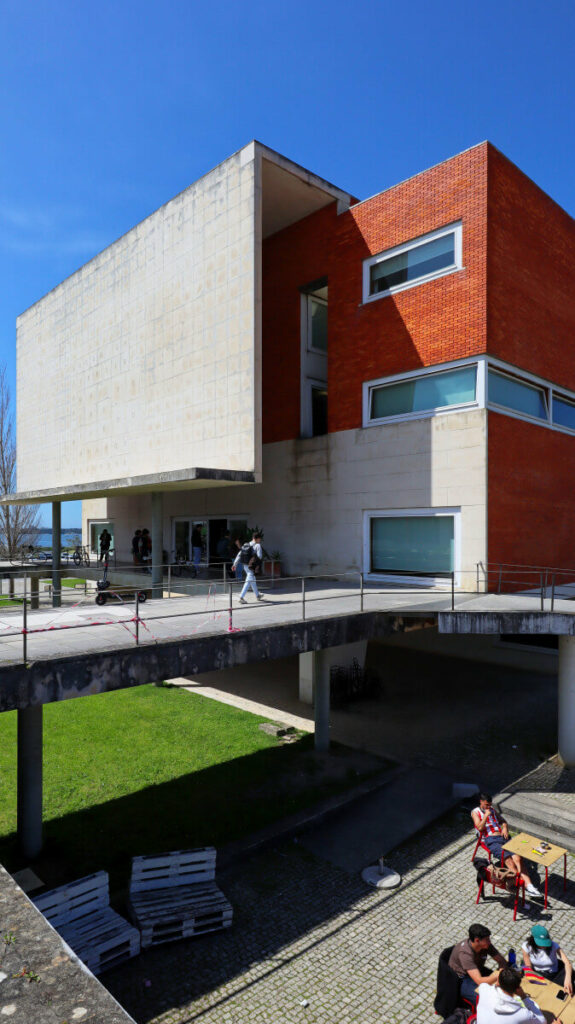
In addition to its aesthetic appeal, the incorporation of sustainable practices in the design of the University Library highlights a commitment to environmental stewardship. Features such as green roofs and energy-efficient systems are integrated into the architecture, making the building a model for future educational facilities.
Embracing Traditional Materials
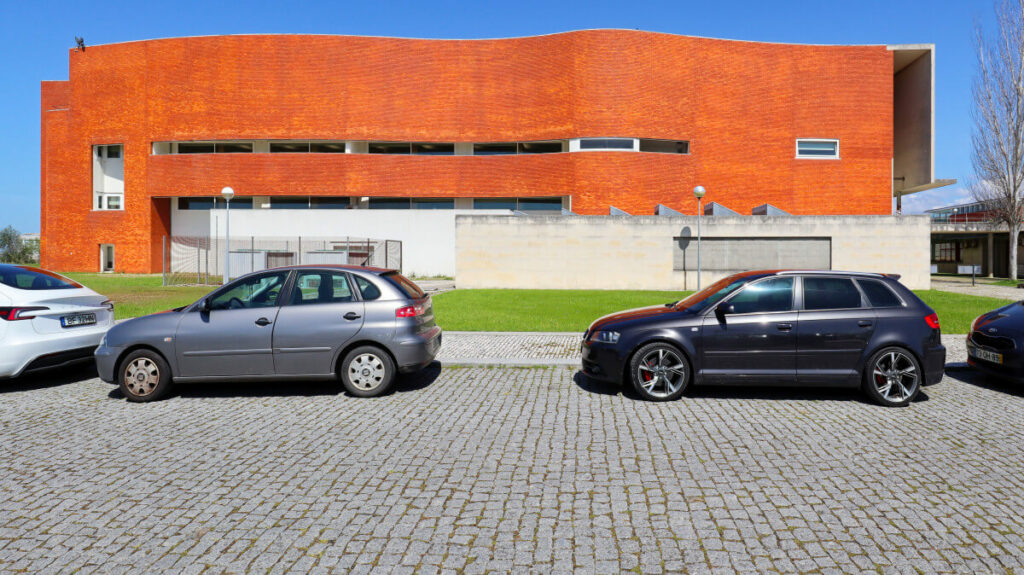
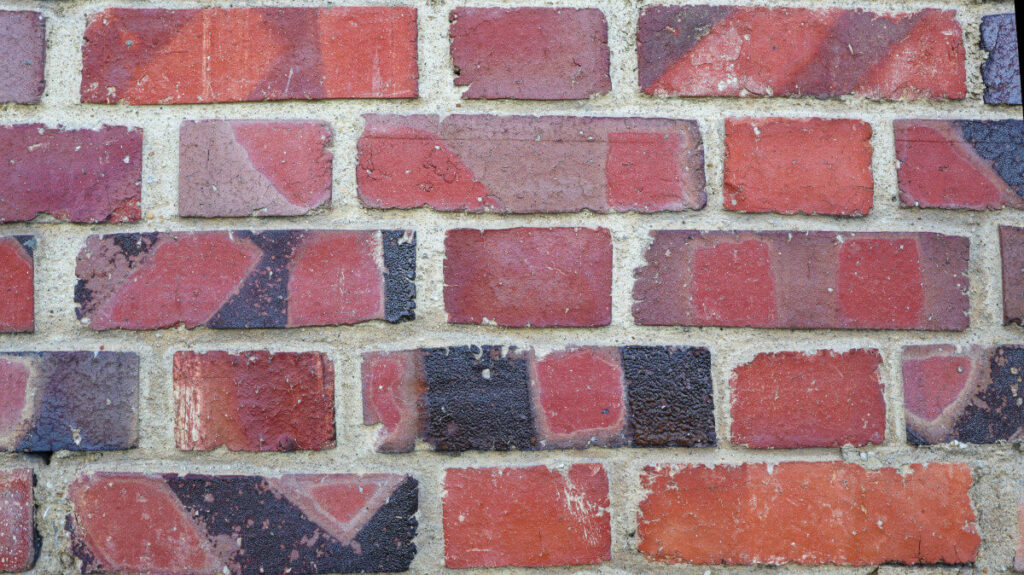
A notable aspect of the campus architecture is the prevalent use of red bricks—a material choice uncommon in Portugal. This decision pays homage to the historic brick manufacturers located near Aveiro, whose factories you can spot while driving in the region. These materials add a layer of regional authenticity to the campus structures.
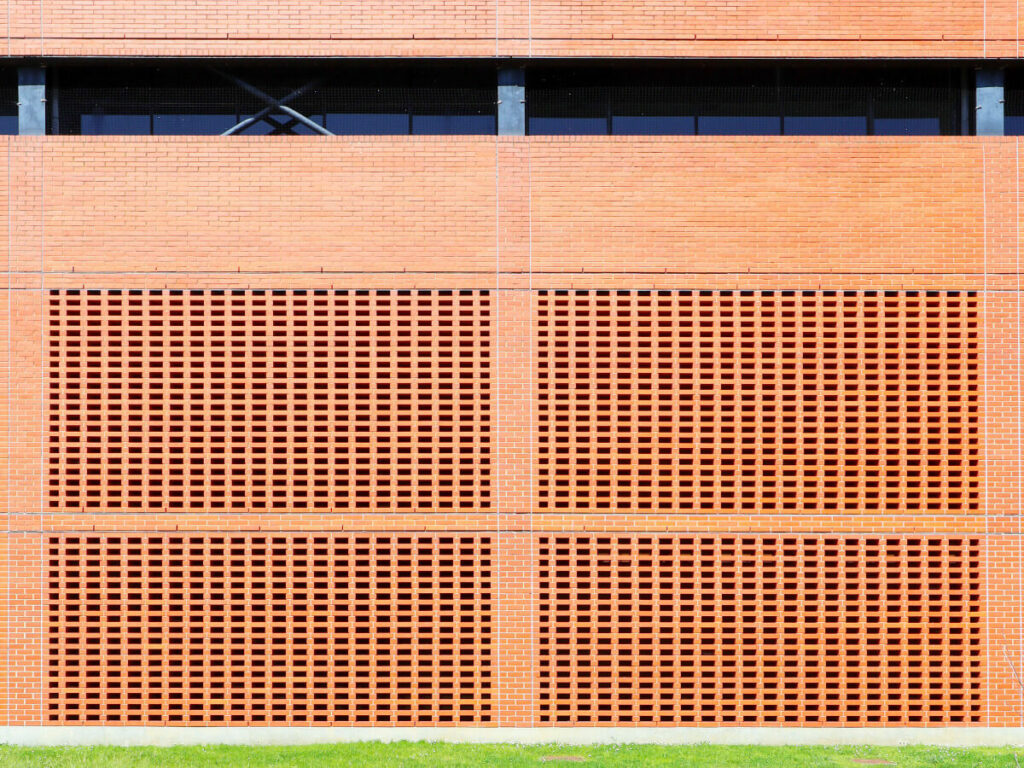


The student residences designed by Adalberto Dias are not just places to live; they are designed with community in mind. Each building includes shared spaces that promote social interaction among residents, facilitating a vibrant living-learning environment. This thoughtful design helps cultivate lifelong friendships and collaborative learning experiences.
Adalberto Dias’ Student Residences
Architect Adalberto Dias designed some of the student residences, which are characterized by their functional design and harmonious integration with the campus environment. The use of red brick continues here, maintaining visual continuity across the campus.
The Chancellor’s Office building is equally significant as it stands as a symbol of the university’s administrative commitment to fostering a supportive and forward-thinking educational environment. The collaboration between Gonçalo Byrne and Aires Mateus reflects a deep understanding of the needs of both students and faculty, ensuring that everyone feels welcome and inspired within its walls.

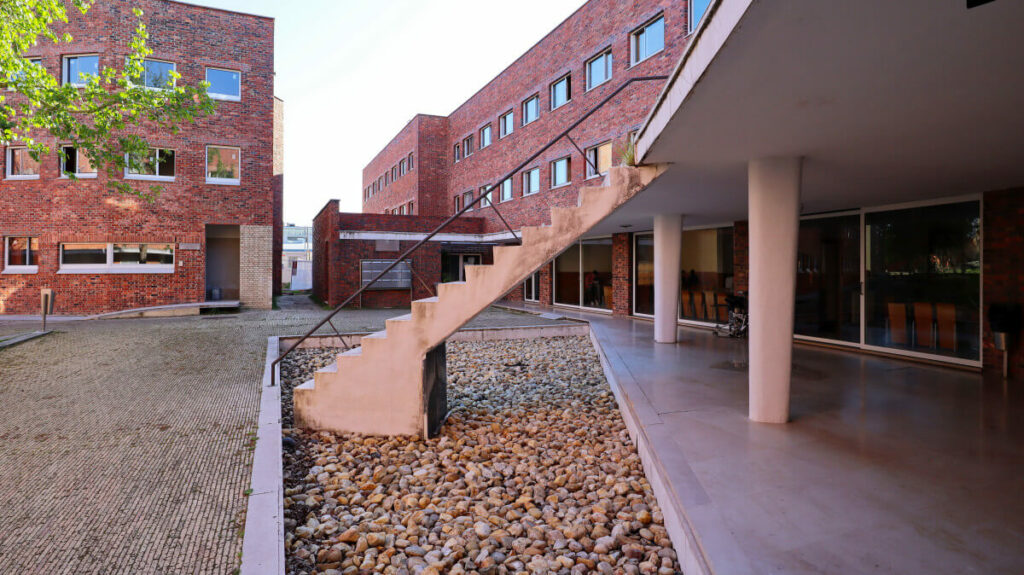
Chancellor’s Office by Gonçalo Byrne and Aires Mateus
The Chancellor’s Office, a collaborative effort between Gonçalo Byrne and Aires Mateus, exemplifies the modern architectural language that defines the University of Aveiro. The building’s design reflects a commitment to creating spaces that are both functional and aesthetically engaging.
Moreover, the University of Aveiro serves as a living exhibition of modern architecture not only through its buildings but also through the events and workshops held on campus. These activities often feature architects and designers who share their insights, providing students an opportunity to learn directly from industry leaders.
To further enrich the architectural experience, guided tours are available, where visitors can explore the campus while learning about the stories behind each structure. These tours are led by knowledgeable guides who can provide context and deeper understanding of the architectural choices made throughout the campus.
Ultimately, the University of Aveiro is more than just a place of learning—it’s a vibrant community that embraces the past while looking towards the future. As we continue to explore Portugal’s architectural landscape, it’s essential to appreciate how these spaces shape our experiences and foster connections among individuals.
In conclusion, I encourage everyone to visit the University of Aveiro to experience firsthand the beauty of modern architecture intertwined with cultural significance. As we celebrate these architectural marvels, we also celebrate the stories and lives they touch every day.
A Living Exhibition of Modern Architecture
The University of Aveiro serves as a living exhibition of contemporary Portuguese architecture. The campus’s cohesive design and the collaborative efforts of its architects have created an environment that is both inspiring and conducive to learning.
I look forward to sharing more insights into Portugal’s architectural marvels with you. Stay tuned for upcoming features on Portugal Modern.
Warm regards,
Ben
Dear Bom Sucesso Community,
I’m Ben — and I’m thrilled to welcome you to the very first blog post on Portugal Modern.
As we embark on this journey together, I want to highlight the unique characteristics of Portuguese modern architecture that captivated me. The blend of traditional elements with contemporary design creates a visual narrative that is both striking and meaningful. Each building tells a story, reflecting the rich cultural heritage of Portugal while embracing modernity.
This page exists because I fell in love with Portuguese modern architecture — right here in Bom Sucesso.
You’re the first group to get access to the website, and that’s no coincidence. Bom Sucesso is where this journey began for me, and it’s still at the heart of everything I want to share.
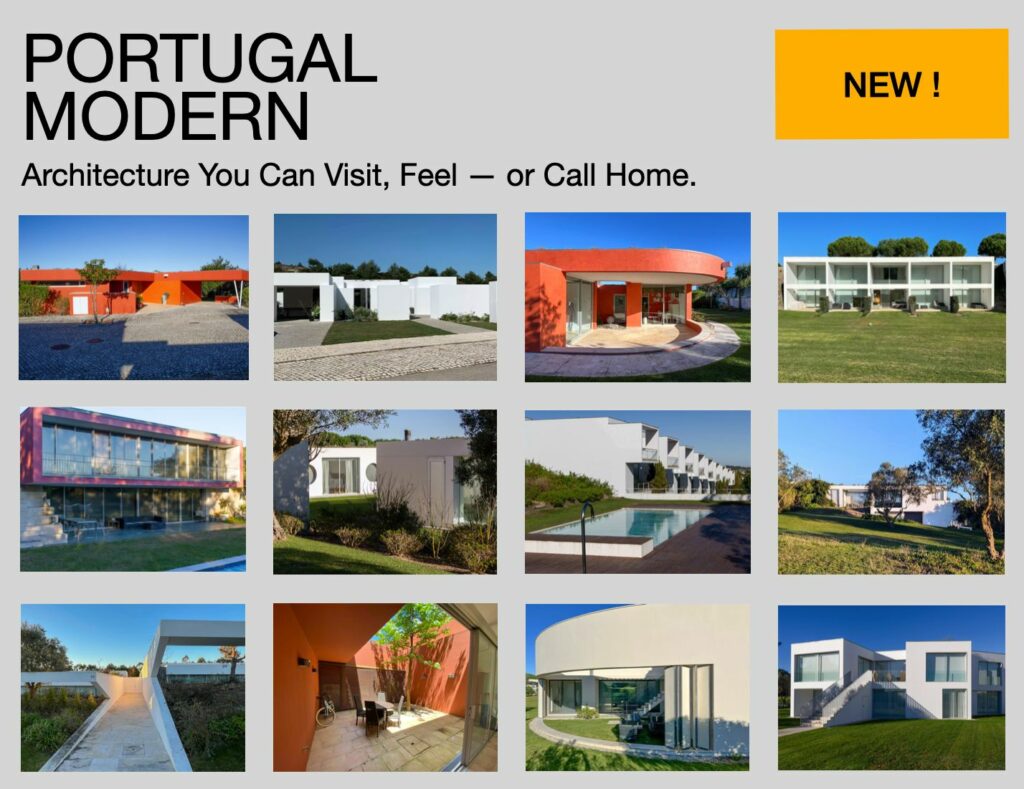
Portugal Modern – Architecture You Can See, Visit — or Call Home
During my travels, I visited several remarkable sites, such as the stunning Casa da Música in Porto, an iconic concert hall designed by Rem Koolhaas, which showcases the innovative spirit of modern architecture. Similarly, the MAAT museum in Lisbon presents a captivating blend of art and architecture, making it a must-visit for enthusiasts.
Over the last few years, I’ve been traveling across Portugal, exploring bold and beautiful examples of modern and postmodern architecture. The result is this site — a growing guide to Portugal’s contemporary architectural landscape.
It all starts here, with a deep dive into Bom Sucesso Resort — a place often described as “the largest living, permanent exhibition of private, contemporary architecture.”
Bom Sucesso Resort itself is a marvel, featuring diverse architectural styles and designs by some of Portugal’s leading architects. From minimalist structures to those with bold, geometric shapes, the resort is a living gallery of modern architecture, inviting visitors to appreciate the creativity and craftsmanship involved.
The site will also include interviews with architects, offering insights into their design philosophies and the challenges they face in their work. These narratives will enrich your understanding of the architectural process and the inspiration behind each project.
What You’ll Find on the Website
- Over 500 photos and 130 house plans from Bom Sucesso
- Links to books, publications, and original house designs
- A full directory of all houses in the resort — searchable, clickable, explorable
Additionally, we will explore sustainable architecture in Portugal, highlighting projects that prioritize environmental responsibility without compromising aesthetic appeal. This focus on sustainability is vital as we look towards the future of architecture.
This site is designed to grow, but Bom Sucesso is the beginning. Think of it as the first chapter in a story that expands across the country — from modernist university campuses to hidden villa neighborhoods and public spaces shaped by Portugal’s greatest architects.
3 Ways to Start Exploring
1. By Modern Architectural Ensembles
Portugal is home to remarkable modern architectural ensembles — from holiday resorts and villa neighborhoods to university campuses.
→ Click here: Modern Architectural Ensembles in Portugal

2. By Modern Architects
Browse by architect to see their work across the country.
→ Click here: Modern Architects from or Working in Portugal
3. Find Your House in Bom Sucesso
For those planning to visit, I will share tips on where to stay, places to eat, and local attractions to enhance your experience in Bom Sucesso and beyond. Portugal is rich in history and modern attractions alike, making it an extraordinary destination.
As we grow this platform, your contributions are invaluable. I encourage you to share your favorite architectural spots in Portugal, as well as any stories or experiences you’ve had related to modern architecture.
Our collective journey to discover and appreciate the beauty of modern architecture in Portugal is just beginning. I look forward to engaging with you, exploring unique designs, and celebrating creativity that inspires all of us.
Search the full list of houses in Bom Sucesso — and discover plans, photos, and architectural details.
→ Click here: Bom Sucesso Houses

A Note to New Visitors
If you’re reading this and you’re not from Bom Sucesso — welcome! This post was originally written for the local community, but the site is built for everyone with a love for modern architecture. Wherever you are in Portugal (or beyond), I hope you find inspiration here.
Feel free to share the site with friends, neighbors, or anyone who’s curious about Portugal’s contemporary design scene. And if you know something I don’t — or want to contribute photos, information, or stories — I’d love to hear from you.
Thanks for stopping by. Let’s explore together.